For decades, the travel industry's scoreboard was blunt: how many tourists showed up. That number is now being joined by something more revealing. The World Travel & Tourism Council, working with Oxford Economics, has launched a set of three indices covering 184 countries that judge tourism on economic scale, environmental efficiency and social opportunity — a shift away from pure arrival counts.
The first, the power index, tracks the sheer size of a country's tourism sector: its economic contribution, employment footprint and investment levels. The top ten reads as you might expect — the US leads, followed by China, India, Germany, France, the UK, Japan, Mexico, Spain and Saudi Arabia.
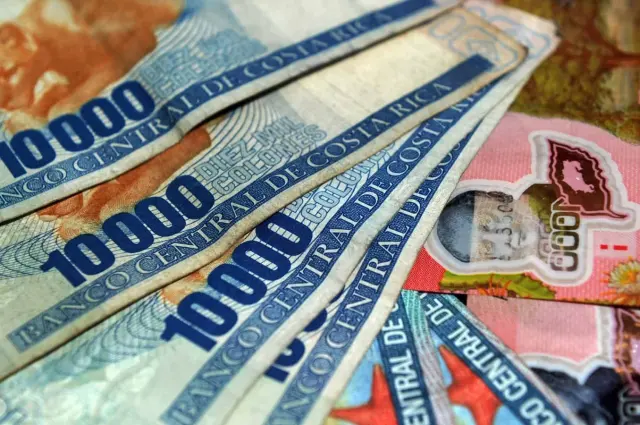
More interesting for conscious travellers is the environmental efficiency index, which measures greenhouse gas emissions, low-carbon energy use, water consumption, air pollution and materials use relative to the economic value tourism generates. Among high-income economies, Sweden comes out on top; Costa Rica leads the upper-middle-income group. Both are countries where a holiday can genuinely align with lower-impact travel — Sweden's rail network and Costa Rica's eco-lodge model make that easier than most places.
The third measure, the opportunity index, looks at whether tourism actually benefits local people: employment growth, jobs for young people and female employment. Croatia tops the high-income tier, the Maldives leads upper-middle-income countries, El Salvador the lower-middle group and The Gambia among low-income economies. The WTTC points out that in destinations like the Maldives, Grenada and Belize, tourism underpins a large share of national employment — meaning where you choose to travel has a direct effect on livelihoods.
Why does this matter beyond boardrooms? Because it gives travellers a shorthand for picking destinations where their money does more good and less harm. If you're weighing a beach holiday, for example, the data suggests Croatia delivers strong local employment benefits among wealthy nations, while Costa Rica pairs a serious tourism economy with comparatively efficient resource use. Gloria Guevara, the WTTC's president and CEO, framed the idea simply: the sector needs to focus on quality of growth as well as quantity.
The timing isn't accidental. Overtourism protests, locals priced out of their own neighbourhoods by short-term rentals, and heatwaves disrupting entire regions have made the old arrivals-only mindset look increasingly hollow. A framework that scores countries on all three fronts gives journalists, operators and governments a common baseline — and gives travellers a way to see which destinations are walking the talk.
The indices won't change where flights go tomorrow, but they're a useful bookmark: when you're choosing between two similar destinations, checking who scores well on efficiency and opportunity is a far better tiebreaker than a headcount ever was.