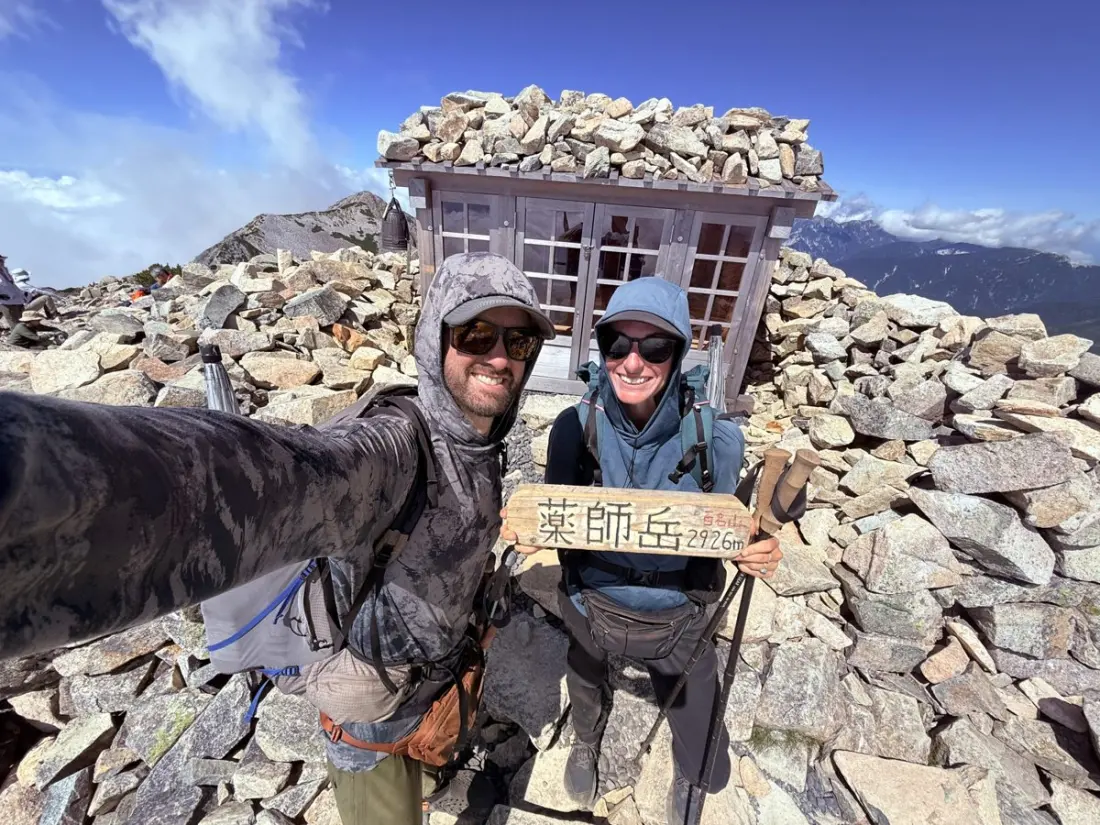
Two American hikers have finished a self-made, roughly 250-mile route across Japan — starting at Toyama on the Sea of Japan and finishing 19 days later in Shizuoka on the Pacific, reaching the ocean at sunset on August 24. Their write-up of the second half of the trek reads as a genuinely useful field report for anyone dreaming of experiencing Japan at walking pace.
The route stitched together the country's famous alpine ranges: the Northern Alps, the quieter Central Alps, and the Southern Alps, before a final road push past Mt. Fuji. Rather than following a single marked trail, the pair connected dots using bits of trail beta, ancient routes and plenty of pavement. That included a stretch of the Nakasendo, the Edo-period highway that once linked Edo to Kyoto, plus a spontaneous side trip by train to Narai-juku, the beautifully preserved post town.
Not everything went smoothly. A tropical storm forced a desperate 3.5-mile run to catch the last bus out of the Northern Alps — with 37 minutes on the clock. The Central Alps delivered surprise crowds and slow single-file hiking. In the Southern Alps, they navigated a storm-damaged road with washed-out pavement and a nerve-testing rockfall section at dusk, finishing a 19-mile day by clambering over a highway retaining fence. Then came their first earthquake, a 2 a.m. shake that barely registered with local campers.
They also hit one of Japan's newer realities: strict rules on Mt. Fuji. The national park enforces footwear requirements, and one half of the duo — a 20,000-mile veteran famous for hiking in Crocs — wasn't going to get in wearing them. They skipped the summit rather than argue with authorities, a sensible call for anyone planning a Fuji climb: check current booking and gear rules in advance.
The rewards, though, are the story. A $35 feast of Hida beef nigiri, gyoza and local sake in Takayama. A free foot bath appearing mid-road-walk in the rain. Vending machines in the middle of nowhere, all-you-can-eat sushi after brutal heat, an all-female onsen to themselves, and a hotel in Gotemba serving a limited-run chilled soba in a creamy spicy sauce — 30 bowls a day, and they got one. Strangers handed them tea and fresh vegetables; two Americans they met at a 7-Eleven walked them to the train station just to keep chatting.
The takeaway for travellers: summer thru-hiking in Japan is a grind — humidity, bugs, tunnels, heat and typhoons — but the country is safe, clean, easy to navigate, and endlessly generous to walkers. And you don't need a famous trail to do it. Picking your own line across a country, the writer argues, shows you a version of Japan no train window can. It's an idea worth stealing for a shorter route: even a few days linking the Nakasendo's post towns with onsen towns and alpine campgrounds would deliver a similar texture.