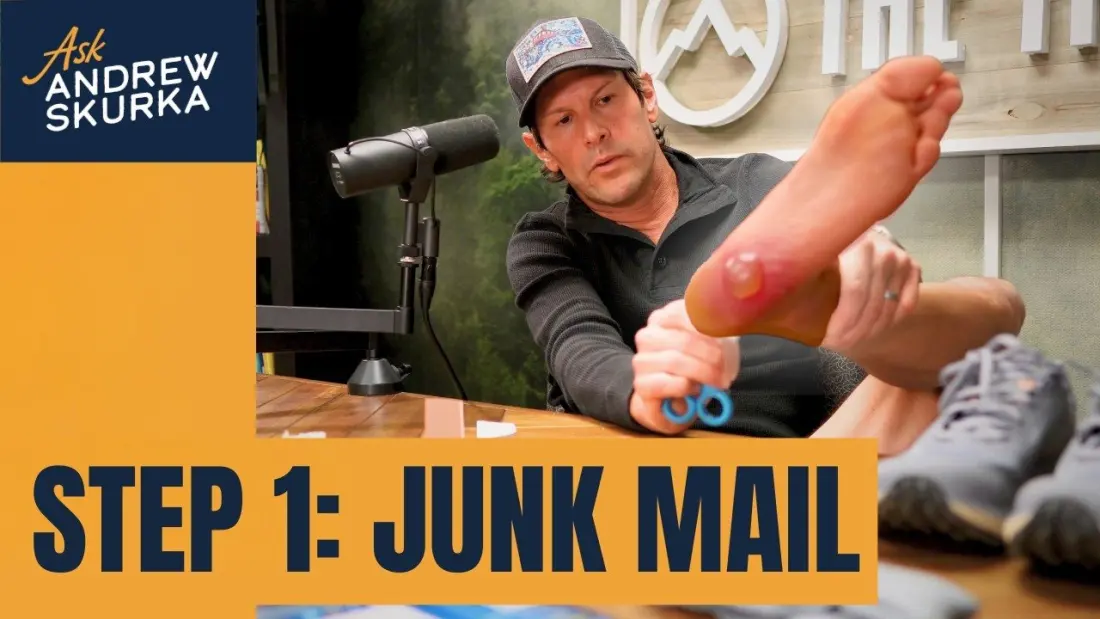
Few people know feet like Andrew Skurka. The veteran backpacker has logged roughly 30,000 miles on long-distance routes including the Sea-to-Sea Route, the Great Western Loop and the Alaska-Yukon Expedition, and for the past 16 years he has also run a guided backpacking service. His advice on blister prevention and treatment, shared via The Trek, is worth a read before any multi-day hike.
Prevention starts at home. Skurka stresses testing shoes and socks as a pair on short walks, then day hikes, then an overnight trip before committing them to a long trek. Once you find a combination that works, buy spares, because manufacturers quietly change fits and materials. His own example: after 25 years with DeFeet Wooleator socks, he bought eight pairs when he learned they were being discontinued. Also trim toenails before you go, file down thick calluses a few days ahead (not the night before departure), and pre-tape spots that always cause trouble.
On the trail, the rules are simple but easy to skip. Take off shoes and socks on breaks longer than 15 minutes, dry your feet overnight, and inspect them regularly, since many hikers only discover problems in the tent. The key habit is acting on hot spots immediately: that warm, pebble-like irritation will turn into a blister within the hour you were hoping to push on to camp.
His blister kit is refreshingly practical. The cornerstone is Leukotape, a nonstretch tape he pre-cut into strips on address-label backing paper so he can handle it without touching the adhesive. He pairs it with scissors, a friction-reducing balm such as Badger Balm rubbed over the tape, gauze to cover open blisters, and benzoin towelettes to help tape stick in wet conditions. A cleaned needle is for draining blisters, and a knife has one drastic use: slicing the back of a shoe's heel cup to relieve pressure around the Achilles.
Taping technique depends on location. Heel blisters get strips with rounded corners; big toes and between-toe blisters get a narrow strip wrapped fully around, with the seam on top; heel-rim blisters need a larger patch extending toward the ankle. Ball-of-foot blisters are the worst to manage, and he suggests marking the spot on the insole and cutting a hole so pressure sits around, not on, the blister. On popping: he leans toward draining painful blisters with a cleaned needle, keeping the flap of skin intact and washing the area afterward. Growing redness and worsening pain mean infection, and the right move is off the trail and to a doctor.
Why does this matter to travellers? Because blisters are the most common reason a dream trek turns miserable. Whether you're planning a hut-to-hut walk, a national park backpacking trip or just a long day hike, Skurka's system, test gear, trim, tape early, and stop the moment something feels hot, costs almost nothing and can save your trip. For those wanting hands-on guidance, his 2027 guided trip schedule goes live in November 2026 with registration opening in December. Full credit to The Trek.