When the dry season drains rivers and floodplains across tropical Africa, most aquatic life is in trouble. The African lungfish simply burrows into the mud, seals itself in a homemade cocoon, and switches off — sometimes for a year or longer.
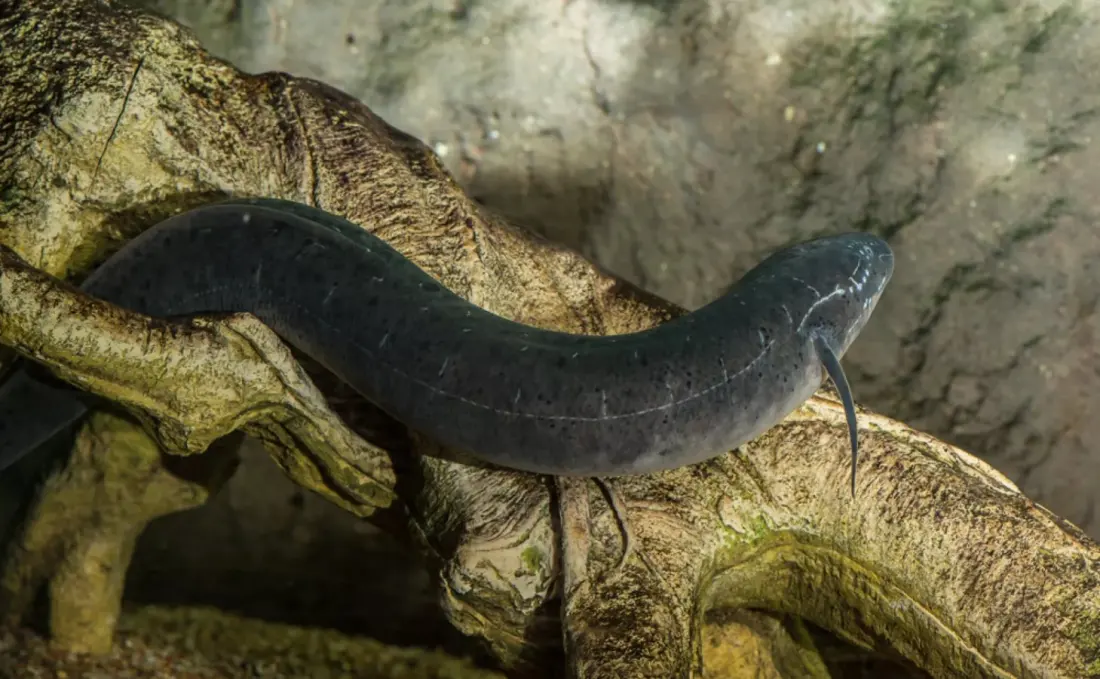
This freshwater fish belongs to a lineage that's been around for more than 400 million years, and it's easy to see why scientists love it. Unlike almost any other living fish, it has both gills and lungs. It spends much of its time gulping air at the surface, and that combination of breathing systems makes it a key species for understanding how vertebrates moved from water onto land. Four species are recognised, living in rivers, swamps and floodplains across tropical Africa. They're long, eel-like creatures with slender fins, and they're far from gentle herbivores — strong jaws and specialised tooth plates let them crush smaller fish, frogs and molluscs.
The survival trick, though, is what makes it famous. As its habitat dries out, the lungfish digs into the soft mud at the bottom and secretes mucus that hardens into a papery cocoon around its body. The casing locks in moisture but leaves a small hole so the fish can keep breathing air. It then enters aestivation — a dormant state triggered by heat and drought rather than cold. Its metabolism, heartbeat and breathing all slow dramatically, it stops eating entirely, and it runs on stored energy. In suitable conditions some individuals can hold out for several years.
When the rains finally return, the mud softens, the cocoon breaks down, and the lungfish wriggles free to resume a normal life of swimming and hunting. For an animal living in regions where seasonal droughts can turn waterways into cracked, dry ground, it's a remarkably effective strategy.
So why should a traveller care? If you're heading to Africa's great wetland and river systems — think swamps, floodplains and seasonal rivers across the continent's tropical belt — this is one of the more extraordinary animals hiding underfoot, literally. Guides on safari or fishing trips sometimes mention them, and during the dry season the odds of seeing evidence of one (a cocoon in dried mud) are better than you'd think. It's also a good reminder of how dramatically these landscapes change with the seasons: a waterway teeming with life in the wet months can be an empty plain come dry season, with entire populations waiting underground. Timing your trip around the seasons changes what you'll see completely.
For anyone with an interest in wildlife, evolution or just strange natural phenomena, the lungfish is a conversation piece worth knowing about before your next African trip.