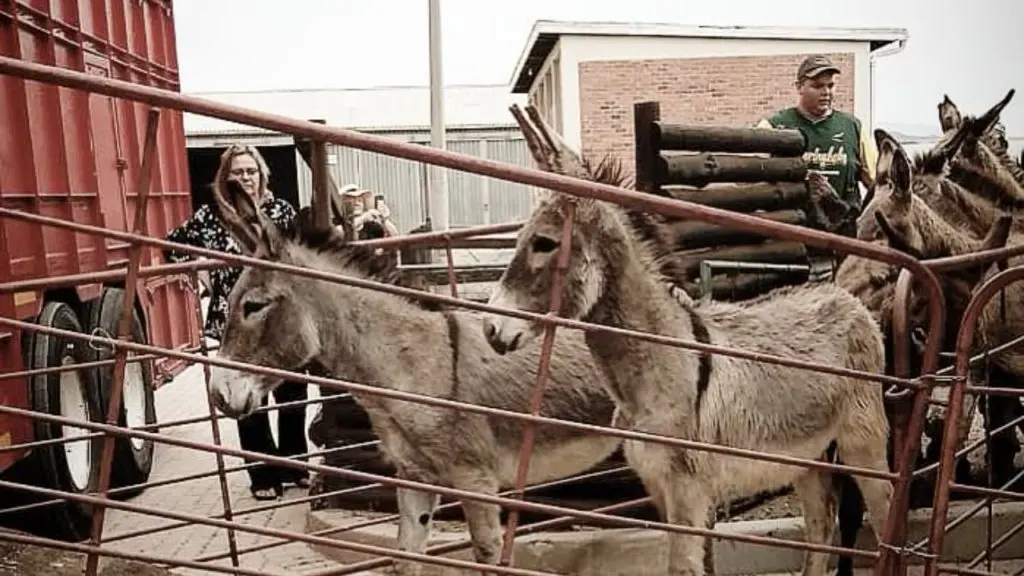
Deep in South Africa's Cederberg Mountains, near the historic village of Wupperthal, a welfare operation has just given 32 donkeys a second chance. The Karoo Donkey Sanctuary, working with the Clanwilliam Animal Welfare Society (CLAWS) and New Turf Carriers, moved the herd out of one of the Western Cape's most rugged corners after the animals were rounded up by the local community.
Wupperthal is no ordinary spot. Founded in 1830 as South Africa's first Rhenish mission station and later run by the Moravian Church, the remote settlement has relied on donkeys for generations to move people and produce through terrain where vehicles struggle. This time the donkeys were the ones needing help. The sanctuary had been alerted to a group of 40 free-roaming animals, and there was real urgency: officials feared the herd could fall victim to South Africa's donkey slaughter and skin trade.
When the team reached the valley, they found underweight mares with young foals and 18 intact stallions, some of the mares possibly pregnant. The rescue didn't go smoothly either. Arriving at sunrise on Saturday, 12 September, the team discovered eight donkeys had vanished overnight and remain in the remote area. Sanctuary founder and CEO Jonno Sherwin says they haven't been forgotten, but the logistics of returning to the valley mean a follow-up operation is on hold for now.
The 32 that made it were first moved down the mountains to a holding facility near Clanwilliam, a drive of roughly three hours, then transferred onto specialist equine transporters. The full journey to the Karoo Donkey Sanctuary took about 14 hours, with the herd arriving around 9pm that Saturday. By the next morning they were grazing in Karoo sunshine, settling into a very different life.
There's a catch: the sanctuary now faces a hefty bill. Gelding 18 stallions at R3,500 each comes to R63,000, which it's raising through once-off donations and its monthly Long Ears Club membership. Anyone who has travelled through the Cederberg or the Karoo will know how much these working animals are woven into the region's history, so this story strikes a chord beyond animal welfare circles. For travellers, it's also a nudge that South Africa's remote mountain communities are home to genuine conservation and welfare efforts that often run on public support.