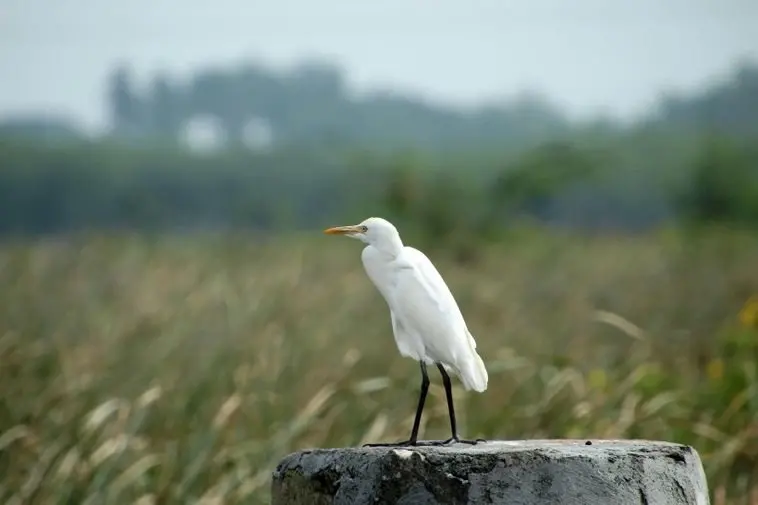
Birdwatchers in Iceland have something to talk about. A cattle egret — a small, stocky heron that belongs in the tropics — was spotted in the Westman Islands for the first time, confirmed by ornithologist Erpur Snær Hansen of the South Iceland Nature Research Centre. The sighting was reported by local outlet Tígull, and video showed the bird striding across grassland near Prentsmiðjan on the island.
If the name sounds odd for a bird found on a windswept North Atlantic island, that's because cattle egrets normally live in warmer parts of Europe, Africa, Asia and North America. They favour dry grassland, fields and pastures, and earned their name by trailing after cattle, horses and even farm machinery to snap up insects disturbed along the way.
Stray individuals have been turning up in Iceland since the turn of the century. Ornithologist Yann Kolbeinsson told Tígull that 26 cattle egrets had been recorded in the country before this one. The same afternoon brought news of a second bird over 600 km away, wandering around Reyðarfjörður in the Eastfjords — two vagrants in one day is genuinely unusual.
For travellers, it's a reminder that Iceland is a surprisingly good place for rare-bird sightings, especially in autumn when winds push lost birds across the Atlantic. The Westman Islands themselves are a birding hotspot year-round: the archipelago off Iceland's south coast hosts huge puffin colonies in summer, and its cliffs and meadows attract migrants and vagrants that don't show up on the mainland. Even a routine visit can turn into an impromptu twitch, as locals discovered this week.
If you're heading to Iceland and fancy a bit of birdwatching, Heimaey — the only inhabited island — is an easy add-on to a south coast trip. Ferries run from Landeyjahöfn near Hvolsvöllur, with flights from Reykjavík as a quicker alternative. Autumn visitors get fewer crowds and the odd feathered surprise; summer gets the puffins. Either way, pack windproof layers — the islands earn their weather.