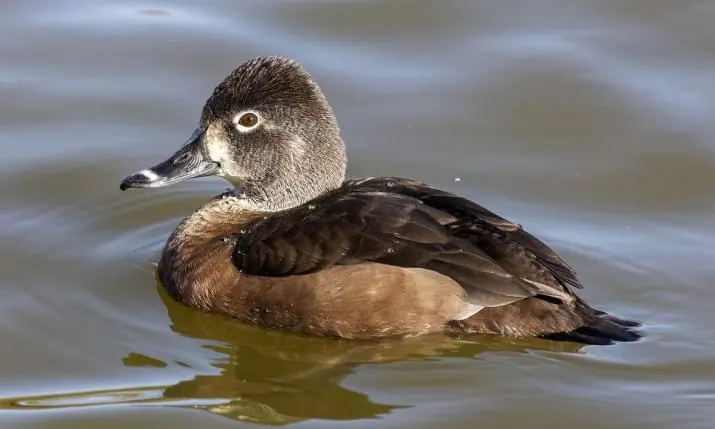
Krka National Park has a new entry in its wildlife log: a Ring-necked Duck, spotted and photographed at the Torak lake spring, has become the first of its species ever officially recorded in Croatia.
The bird was snapped by Italian ornithologist Matteo Skodler during a visit to the park, and the Croatian Rare Bird Records Committee has since confirmed the sighting. That confirmation matters because the Ring-necked Duck (Aythya collaris) is a North American native, most at home on wooded lakes across the northern United States and Canada. Individuals do turn up in Europe now and then, but only as vagrants — birds blown far off course from their usual range. Each record is a genuine rarity.
The species is easy to pick out if you know what to look for: a compact body, a noticeably large head with a distinct shape, and a dark grey bill tipped with black and a white band near the end — a three-toned look that gives it away. Unlike dabbling ducks that tip forward on the surface, it feeds by diving, hunting aquatic plants, molluscs, insects and small fish underwater.
For Krka, the record pushes the park's species count to 232. The park's mix of rivers, lakes, wetlands and woodland makes it a key stopover for birds during migration and a wintering ground for others, which is exactly why an American stray could end up here in the first place. Park staff point to ongoing monitoring as the reason records like this get documented at all.
Why should a traveller care? Krka is already one of Croatia's most popular natural attractions thanks to its travertine waterfalls and swimmable river sections, but the bird count shows there's a quieter side to the park beyond the main boardwalks. The Torak spring where the duck appeared sits away from the crowds, and between migration seasons and winter, there's wildlife worth the detour almost year-round. Birders chasing a rare tick will want to keep an eye on local reports — a vagrant like this may not linger, but Krka's 232 species mean there's always something to find. Bring binoculars, go early, and consider timing a visit for spring or autumn migration when the park's habitats are at their busiest.
Reported by Croatia Week.