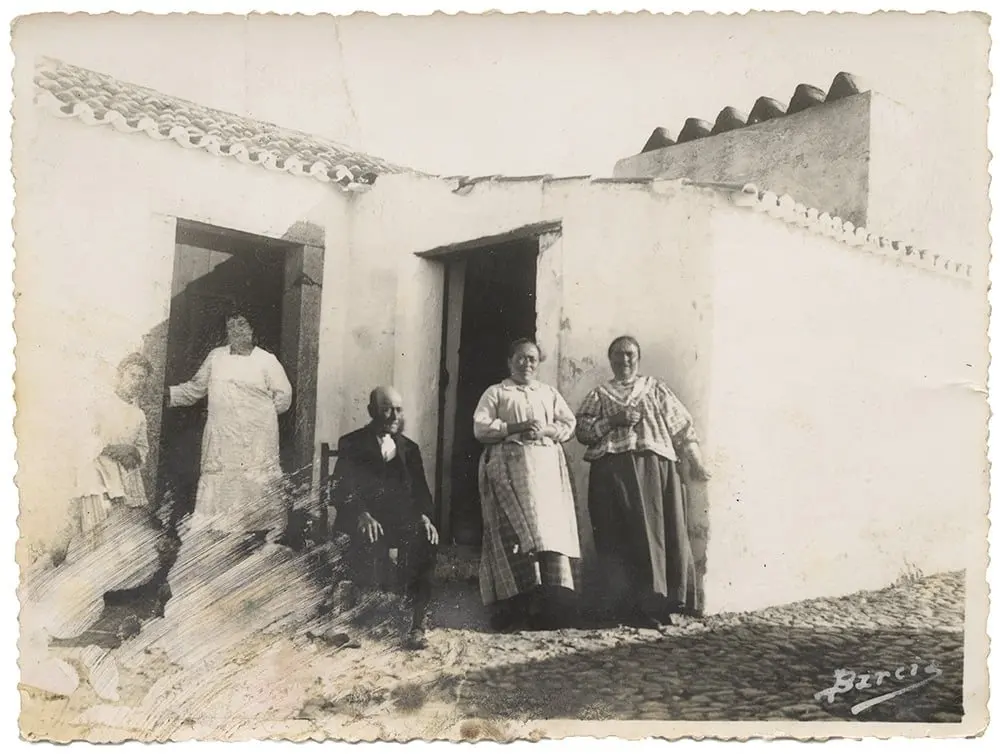
A forgotten piece of darkened glass, tucked away in storage, turned out to be something remarkable: an early photographic negative by José Bárcia, an amateur chronicler who lugged his camera around the Setúbal countryside between 1895 and 1917.
That discovery set graphic designer Cecília Matos on a years-long archival hunt, culminating in a new book gathering Bárcia's images of Quinta do Anjo, Palmela and Setúbal. Her link to the material is personal — the village where Bárcia's aunt taught is also her own family's home village, and she even spotted her great-great-grandfather in one formal group portrait, flanked by two female relatives so similar she can't tell which is which. One of them, the great-aunt, later died in the Spanish flu pandemic.
Bárcia's day job was supplying pictures for Júlio de Castilho, the man widely credited as the father of Lisbon history writing. But in the unstable years before the 1910 revolution toppled Portugal's monarchy, he escaped to the countryside whenever he could and photographed everyday rural life: kitchen scenes with onions hanging from the ceiling for the evening pot, a smartly dressed beach excursion to a Setúbal cove — donkeys, woollen suits, elaborate hats and parasols — and Palmela itself, eerily empty at the time as nearby Setúbal boomed. Today's visitors who know Largo de São João as a lively main square might be surprised to see it looking like a ghost town in his frames.
He sold prints in Lisbon in postcard form and staged slide shows lit by candle power — cutting-edge entertainment in an era when a photograph of yourself arriving on horseback must have felt close to sorcery. During the pandemic, with backing from the Palmela municipal council, Matos compiled the surviving images into the book. When it was nearly finished, a second cache surfaced: Bárcia's own personal shots from his last house, essentially holiday snaps of the period, just with far bigger skirts.
For travellers heading to the Setúbal peninsula, the book is a genuinely useful companion. Palmela's castle, wine country and hilltop views make sense of why Bárcia kept returning, and the pictures add context to streets you can still walk today. Matos also tracked down elderly locals who, as children, remembered Bárcia's visits and their recollections are woven into the book. It's available through her website, cecilia-designs.com — worth a look before a trip to the Arrábida coast or a day trip from Lisbon.