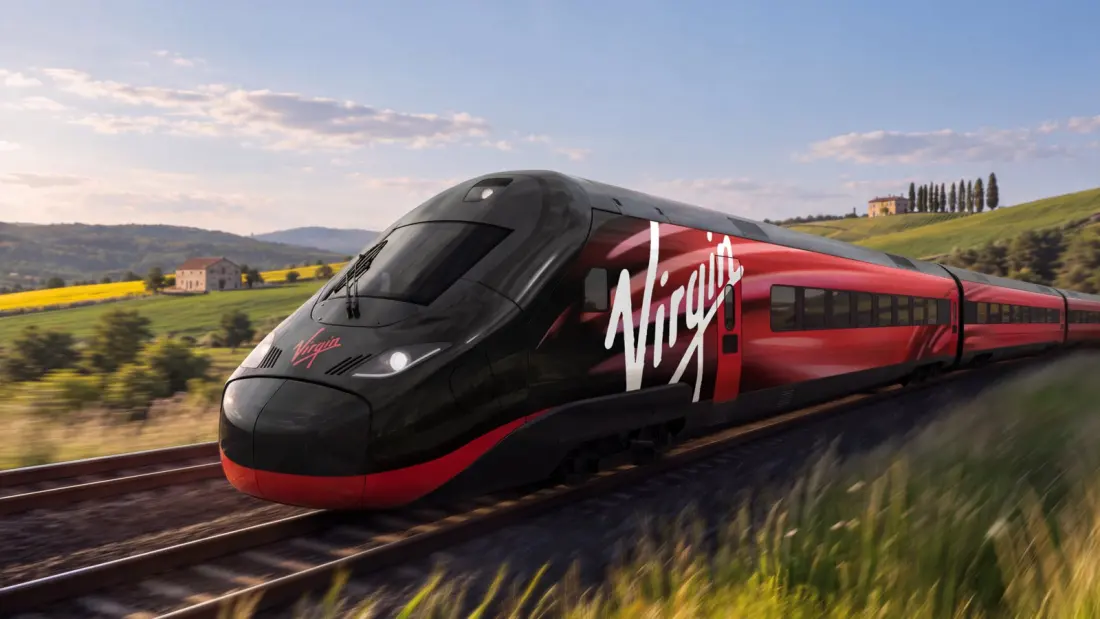
Rail travel between London and the continent could look very different by the end of the decade. Virgin Group has announced plans to run cross-Channel passenger trains from 2030, putting up to 20 daily return services on routes from London to Paris, Brussels and Amsterdam – and becoming the first serious challenger to Eurostar's long-standing monopoly.
The company has committed to 12 Alstom Avelia Stream trainsets, capable of 300km/h, with Alstom on board to maintain the fleet under a 30-year deal. If the full timetable comes off, Virgin estimates it would add close to 7.5 million seats a year and support up to 1,000 jobs.
The onboard experience is where Virgin plans to stand out. Early designs show a black-and-red livery, with product ideas borrowed from across the group: Virgin Atlantic lounge concepts for pre-departure and social spaces, Virgin Voyages thinking on food and drink, and Virgin Hotels influencing seating and interiors. The service is also expected to tie into the Virgin Red loyalty scheme, and the group is exploring connections between the trains and Virgin Atlantic flights – a potentially neat option for onward travel.
Importantly, Virgin is further down the track than any rival. It's the only prospective new Channel Tunnel operator to have secured UK track access, with the Office of Rail and Road approving use of High Speed 1 from 1 October 2030 through to the end of 2040. It has also signed an agreement with Eurostar itself to use the Temple Mills International depot in east London, the only maintenance facility directly reachable from High Speed 1.
That's not the same as a green light, though. Virgin still needs permissions for the tunnel itself, the European rail networks, and various safety approvals. Eurotunnel's passenger rail capacity is only about half used, so there's room – but new entrants face hurdles around station access, border facilities and depots.
Virgin isn't the only one circling. Italy's state-owned FS Italiane Group has ordered 19 Hitachi high-speed trains in a programme worth roughly €2 billion, and says its Paris–London route should start in 2029. But it hasn't matched Virgin's UK track-access position, so its launch hinges on infrastructure deals and regulators.
For travellers, the significance is simple: more trains, more seat availability and likely sharper prices on some of Europe's busiest routes. Eurostar has faced overcrowding and fare complaints for years, and competition of this scale – plus a possible second operator from 2029 – could finally loosen things up. Nothing is guaranteed until approvals land, but 2030 is suddenly a date worth watching for anyone who flies London–Paris out of habit.