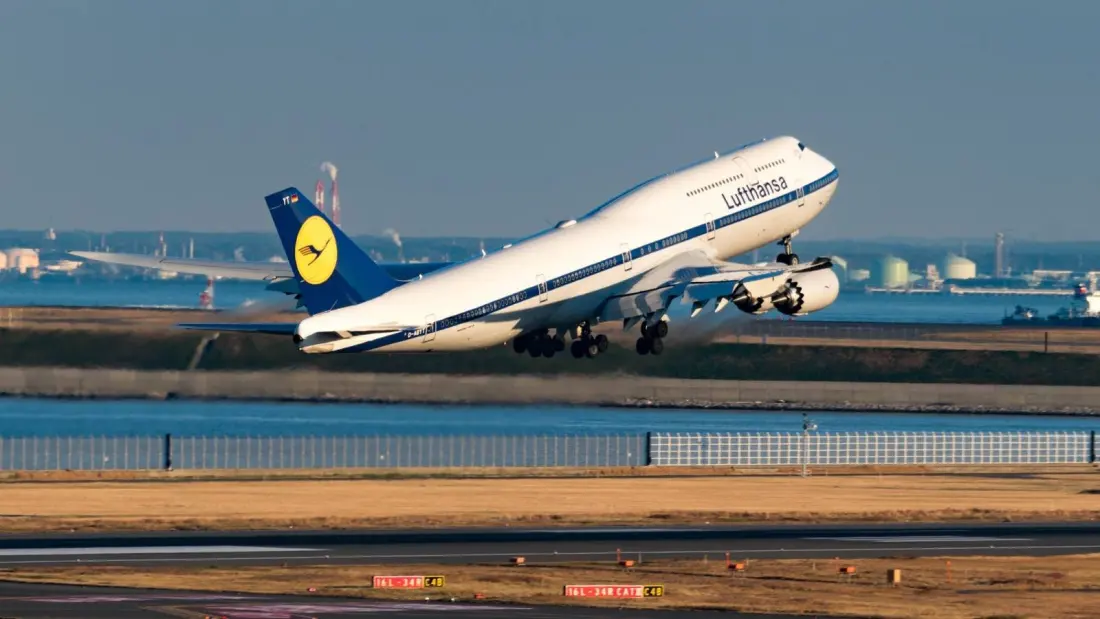
Two widebody jets nearly met on a taxiway at Miami International Airport this month, and only a sharp stop by the Lufthansa crew kept it from turning into a real collision.
On November 5, Lufthansa flight LH463 — the daily Miami-to-Frankfurt service operated by a Boeing 747-8 in a special retro livery — was taxiing out for departure when an American Airlines Boeing 787-8 arriving from Philadelphia turned directly into its path. The American crew, operating flight AA1155, had been instructed to hold short of taxiway Yankee but evidently didn't, crossing in front of the jumbo jet around 5:18 PM. Miami air traffic control, reportedly exasperated, noted the Dreamliner had "made every wrong turn possible already."
The Lufthansa pilots told controllers they had to brake hard from full taxi speed, later saying it was "very close to an accident in the making" and that they would file a report. Thanks to their quick reaction, no contact occurred. The 747 eventually departed 53 minutes late at 5:33 PM and reached Frankfurt 39 minutes behind schedule the next morning — though the delay wasn't entirely down to the close call, as the flight had already pushed back late and faced a long taxi to the far end of Miami's southern runway.
There's a quirk in the details, too: American routinely flies a 787-8 on the roughly three-hour hop from Philadelphia to Miami. Since November 1, the widebody has handled one of the airline's nine or ten daily rotations on that route, with A321s, A321neos and 737 family jets covering the rest. The aircraft involved carried registration N803AL.
Beyond the drama, the incident is a useful reminder of how ground movements at big airports work — and where the weak points are. Controllers clear aircraft along specific taxiways and largely have to trust that pilots follow instructions; when someone takes a wrong turn, the safety margin depends on other crews spotting the problem in time. For passengers, the practical upshot is minor: a taxiway conflict like this costs minutes, not days, and there were no injuries or damage.
If you're flying through Miami, Frankfurt or Philadelphia, none of this changes your plans. But it's a decent illustration of why ground delays happen at busy hubs — and why sitting on a taxiway for half an hour isn't always the airline's fault. Most travellers on affected flights never hear the radio chatter that explains what went on outside the window.