A Royal Caribbean pianist is recovering after treading water for nine hours off the California coast — a rare survivor of one of cruising's most feared accidents. The crew member fell from the 14-deck Ovation of the Seas and was spotted by two fishermen from Newport Beach about 20 miles offshore on Friday 6 November. He was hospitalised but is in a stable condition.
The case has put the spotlight on what the industry calls "man overboard" incidents, announced on ships with the code phrase "Code Oscar". According to the monitoring site Cruise Junkie, there have been 13 such cases so far this year, involving both passengers and crew. They include a 56-year-old man who went overboard from Carnival Panorama off Mexico's Baja Peninsula in September, and a 77-year-old woman lost from Holland America's Nieuw Statendam on New Year's Day, whose search was called off after eight hours. Last year brought 12 cases, among them a five-year-old girl who fell from the fourth deck of Disney Dream — her father jumped in after her and both were rescued after nine minutes in the water.
The numbers sound alarming until you put them in context. Around 32 million people cruise each year, and Cruise Junkie has logged 443 overboard incidents since 2000. Blogger Emma Le Teace, of the Emma Cruises YouTube channel, puts the odds at roughly one in 1.4 million. CLIA data shows fewer than one incident per three million passengers between 2009 and 2025, a period when passenger capacity nearly tripled.
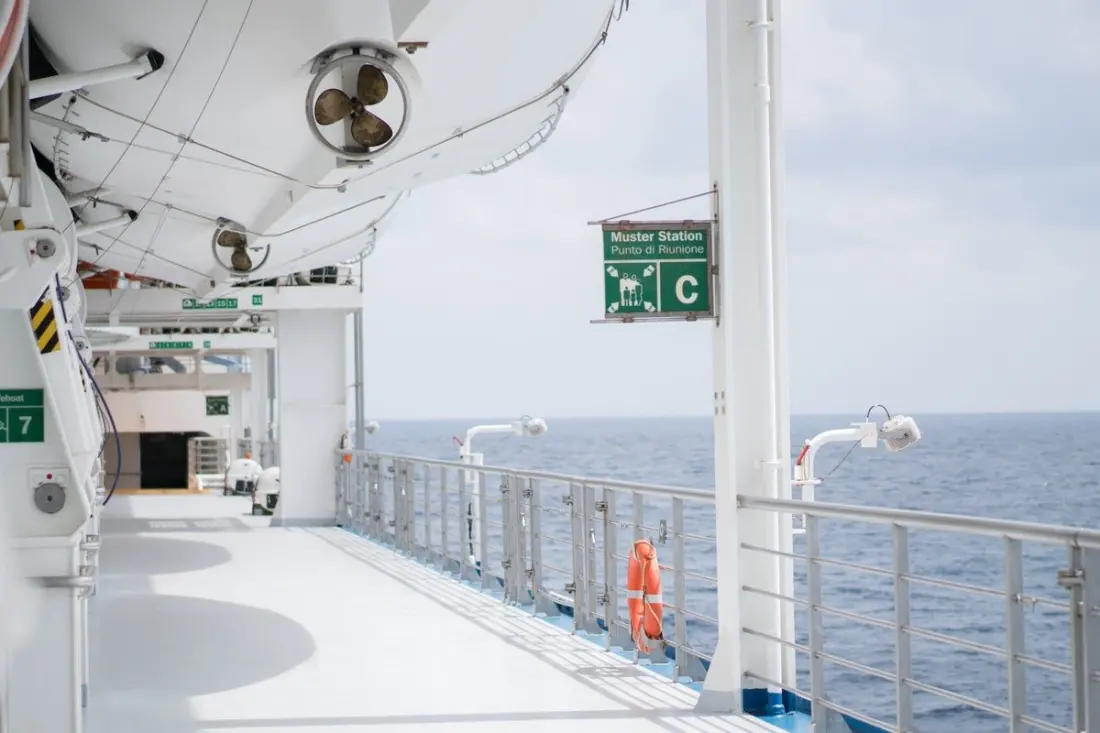
Crucially, research by CLIA found that every recorded incident between 2009 and 2019 involved an intentional or reckless act — no case of someone acting sensibly has fallen accidentally over a railing. Ships are built to make that hard: outer-deck railings must be at least 42 inches high, balconies at least a metre, and the average vessel undergoes dozens of safety inspections a year under International Maritime Organisation rules.
If someone does go overboard, the procedure is immediate: the ship stops, outer decks may be locked down, rescue boats launch, the coastguard is alerted and nearby vessels keep watch. Passengers are told to shout "man overboard", alert a crew member and throw anything that floats. Some ships have overboard sensor systems, and US-bound ships carrying more than 250 passengers must have deck cameras. Still, the statistics are sobering — of 212 incidents from 2009 to 2019, only 48 (28.2%) ended in rescue.
There's a legal dimension too. Maritime lawyer Brad Huffman notes that cruise line liability is often capped by the fine print in ticket contracts, limiting families' options for compensation. One family is suing Royal Caribbean after 66-year-old Dulcie White fell from a Taylor Swift-themed cruise in October 2024, alleging staff kept serving her drinks despite visible intoxication.
For holidaymakers, the takeaway is simple: cruising remains statistically one of the safest ways to travel, and staying behind railings — especially after a few drinks — all but removes the risk.