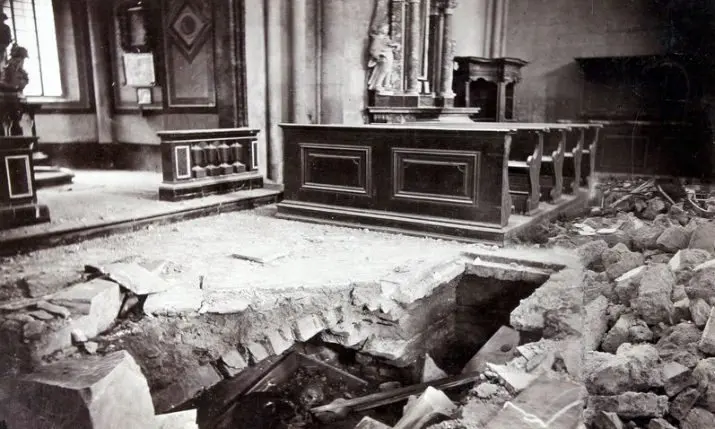
Zagreb marked a grim anniversary this week: 146 years since the strongest earthquake in the city's history. On 9 November 1880, a magnitude 6.3 quake struck at 7:33 a.m., killing one person and damaging or destroying more than 1,700 buildings.
The scenes were dramatic. Around 3,800 outbound train tickets were sold at Zagreb Main Station within 24 hours as residents fled to nearby towns. The most significant casualty was Zagreb Cathedral, which had to be rebuilt and wasn't finished again until 1906. Aftershocks continued at weakening intervals until Christmas, sending jittery locals to sleep in the open at parks like Tuškanac and Maksimir — luckily during unusually mild weather.
A vivid account survives thanks to Ćiro Truhelka, then a schoolboy and later one of Croatia's most respected archaeologists. In his memoirs, published in 1942, he described drinking coffee when the walls began to sway, hearing St. Mark's Church bell tower ring out as the ground lurched, and escaping past a collapsed chimney. Walking to school through Mletačka Street, he found rubble everywhere: torn-off roof tiles, downed chimneys, cracked facades — including significant damage to St. Katarina's church on Katarina Square. He noted an interesting quirk: the older, thick-walled buildings of the Upper Town largely held, while newer construction in the Lower Town fared far worse.
What makes the story more than a historical curiosity is what came next. Truhelka recorded how a relief effort spread across Europe, with donations and reconstruction loans pouring in from abroad. The money fuelled a building boom: new streets appeared, old ones stretched toward new outskirts, and the city grew from 30,000 residents to 40,000 in a remarkably short time. In his words, the quake — initially seen as a catastrophe — ended up waking a city 'from a long nap' and making it more beautiful and spacious. Much of the handsome Zagreb that visitors stroll through today traces back to that post-earthquake reconstruction.
For travellers, it's a reminder that Zagreb's architecture tells a story of resilience. When you visit Zagreb Cathedral, look for the twin neo-Gothic spires completed after the 1880 damage. And the earthquake actually spawned a small tourism tradition: the seismograph collection at the Croatian capital's technical museum and the city's seismic history are part of local heritage tours. It's also worth remembering that Zagreb was shaken again by a 5.5-magnitude quake in March 2020 — the cathedral's spire fell once more, and restoration work is still ongoing, so expect some scaffolding around the historic core.
Who should care? Anyone planning a city break in Zagreb, especially those drawn to Austro-Hungarian streetscapes and Upper Town gems like St. Mark's Church and Gornji Grad. Knowing the backstory makes those facades far more interesting — every reconstructed wall has a tale to tell.