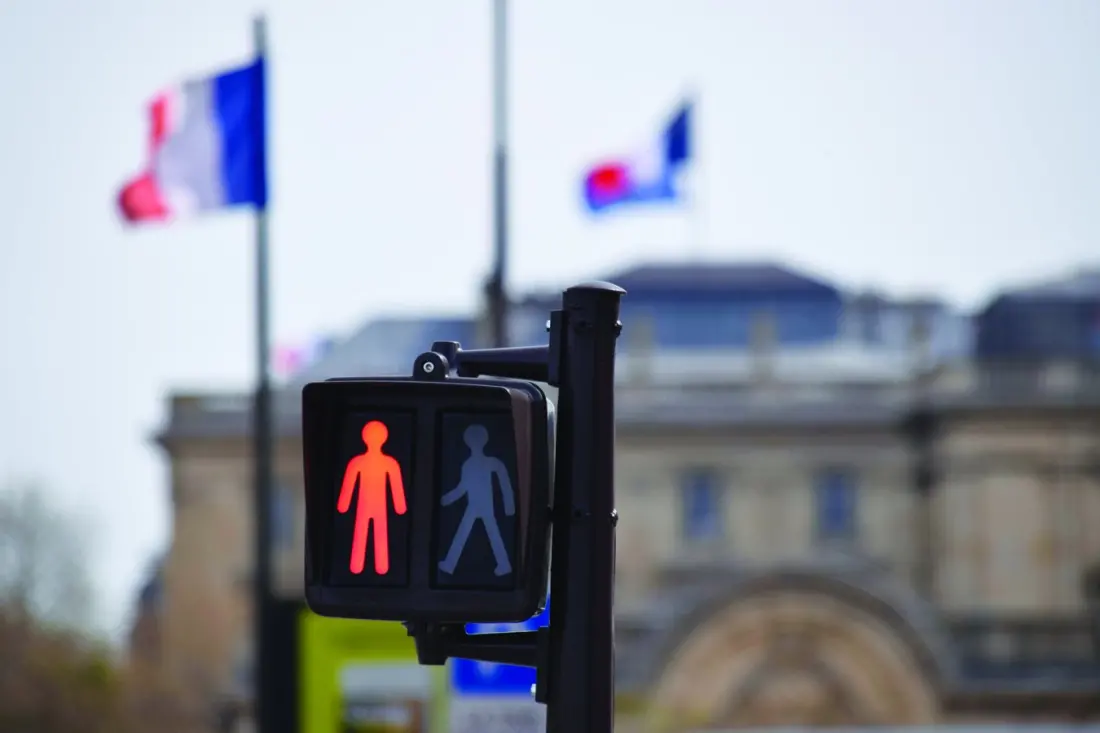
Paris has a reputation for organised chaos, and a new essay from musician and author Stephen Clarke argues the chaos is only half the story. His theory, drawn from years of living in the French capital: the city runs on a steady hidden beat, like a jazz track — loose on the surface, disciplined underneath.
His evidence is everywhere once you look. Pedestrians cross against the lights and old sofas appear dumped on pavements, seemingly at random. Yet there's an official online system for disposing of bulky furniture, and a food market's mess of crates and rotting fruit will be swept away within an hour of closing. Things look untidy in Paris, but only for a defined, managed window.
Clarke's most vivid example comes from an unlucky bout of conjunctivitis. His local pharmacist couldn't prescribe the most effective treatment without a doctor's note — classic French rigidity. His own GP was booked solid. Enter SOS Médecins, a national service offering same-day home and clinic appointments. The waiting room he landed in was pandemonium: a GP, a nurse giving vaccinations, another doctor issuing work and driving-licence certificates, all jostling with impatient patients. When one man tried to jump the queue claiming he couldn't use the internet, the doctor loudly instructed him to book online like everyone else — then agreed to squeeze him in afterwards. Order and improvisation, negotiating in real time.
The bill made the point even better: under €20 for a same-day appointment, refunded in full by French health insurance a few days later.
For travellers, this duality is genuinely useful to understand. That boulangerie queue that seems like a free-for-all has unspoken rules. The street market that looks chaotic gets cleaned on a precise schedule. The pharmacy that turns you away isn't being difficult — it's following a system that, when you find the right door (like SOS Médecins for urgent care), works remarkably well. Visitors who expect American-style flexibility or German-style rigidity will be confused by both halves; those who accept the French blend tend to have a much smoother trip.
Clarke frames it through music: French is too grammatically intricate to be a rock 'n' roll language, so it's jazz instead — which might explain why jazz has always thrived in France, and why a punk club in Perpignan full of teenagers doing rehearsed 1950s jive moves to The Clash left him so baffled. French life, like French cuisine, looks artistic and improvised, but there are rules — heaven help anyone who cuts the point off a slice of Brie.
If you're heading to Paris, keep the lesson in mind: what reads as anarchy is usually a system you haven't learned yet. Learn the beat, and the city gets a lot easier to navigate.