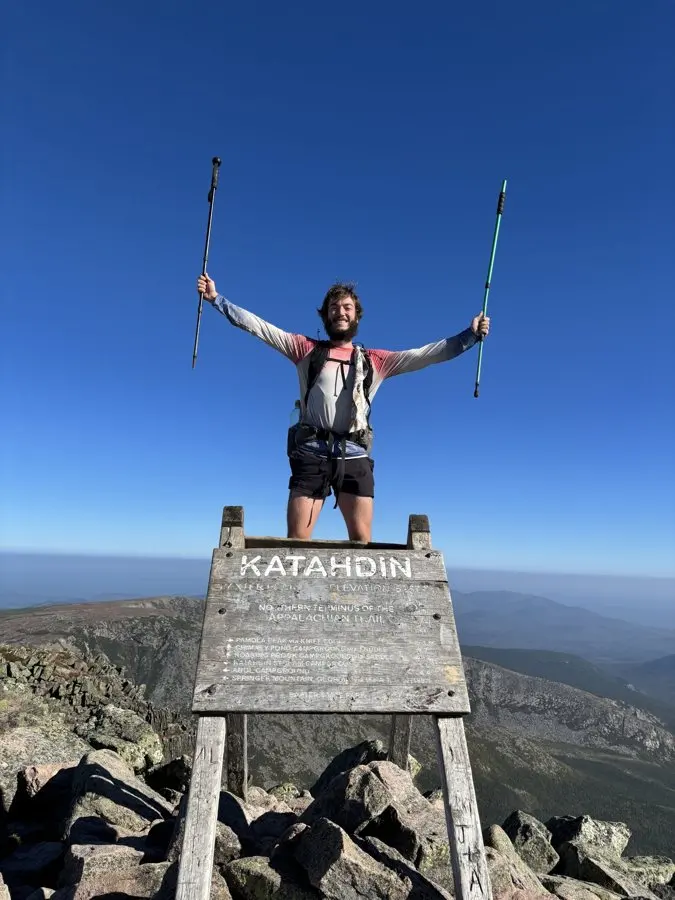
A week after topping out on Mt. Katahdin, a hiker known on trail as Veto sat down and wrote himself a letter. Published on The Trek, it's a look back at the final week of a full Appalachian Trail thru-hike — roughly 2,200 miles from Springer Mountain in Georgia to the granite summit of Katahdin in Maine — and an honest account of what those months actually cost.
The letter opens with fear. Justin, writing to his trail self, started the hike freshly out of shoulder surgery, unsure he could handle something so physically demanding. He over-researched gear and watched endless thru-hiking videos before his first day ever arrived. Even routine trail tasks felt exposing at first — filtering water, cooking on a stove, sticking out a thumb for a hitch into town. The turning point was the trail's oldest lesson: people help, and it usually works out.
Then came the pain, and plenty of it. Just five days in, a slip on loose leaves near Neel Gap — the trail's famous first outfitter stop in Georgia — hyperextended his achilles and briefly convinced him the hike was over. It wasn't. He dealt with bleeding blisters, an ingrown toenail that needed surgery and antibiotics, and late-trail knee pain bad enough to stop him in his tracks. His method was simple: short days, ibuprofen, and telling himself to try again tomorrow. Consistency got him to Maine.
The social side of a thru-hike gets an honest treatment too. He found a 'tramily' (trail family) right away at Springer Mountain, which made logistics like resupply stops and hostels easy. But groups drift apart — by Virginia he was down to one companion, Small Bites, and when she took time off, he hiked roughly 800 miles solo. Instead of breaking him, the solitude reminded him why he'd come: the trail was where he cleared his head. Late in the hike he left a group he felt was dragging the experience down, switched from hotels to hostels, and finished among new friends.
Why does this matter if you're not hiking 2,200 miles? Because it strips away the Instagram version of a big trek. The letter is a useful reality check for anyone eyeing a long-distance walk: injuries are near-certain, the people you meet matter as much as the scenery, and most beginners' fears dissolve within the first week. It's also a quiet plug for the trail itself — a route that passes through 14 US states, a culture of hostels, outfitters and trail towns, and a finish line on Katahdin that hikers describe as the hardest and best day of the whole thing. Justin already has the Pacific Crest Trail pencilled in for 2029. The rest of us can start with a week on the AT and see how we get on.