More than 50,000 cartoons. Sixty-eight years of drawing. One man's pen chronicling Egypt through colonialism, revolution, war and upheaval. Ahmed Toughan, often called one of the country's finest editorial cartoonists, died on 12 November 2014 at 88 — and his work remains one of the most vivid visual records of modern Egypt you can actually go and see.
Born in Minya in Upper Egypt in 1926 and raised in Cairo, Toughan got his start when a primary-school teacher noticed his talent and fed him books on painting and Pharaonic art. By World War II he was painting anti-British slogans on walls. In 1946 he joined the weekly Rose al-Yusuf, trained under Rakha — whom he regarded as Egypt's first cartoonist — and later became the first Egyptian to draw for a daily paper. When Al Gomhuria launched in 1953, its founding editor-in-chief was none other than Anwar el-Sadat, a longtime friend, and Toughan stayed closely tied to the paper for decades.
His pen followed Egypt everywhere. He spent time with Algerian independence fighters in the mountains, travelled with Egyptian troops to Yemen, and visited Palestine in the 1960s, later holding exhibitions on the Palestinian cause. Under Mubarak he ran cartoon campaigns against unemployment, corruption, failing schools and the migrants lost on "death boats" crossing the Mediterranean. After the fall of Baghdad in 2003, his drawings on Iraq drew accusations of anti-Semitism from Israel — charges he rejected. He also broke ranks with his peers in 1995, meeting visiting Israeli cartoonists in Cairo when nearly every other Egyptian artist boycotted the visit. "Peace is inevitable, whether we like it or not," he told UPI at the time.
The honours stacked up late in life: the Grand Medal of Fine Art in 1997, the Head of Arab Cartoonists Award in 1987, and in June 2014 — just months before his death — the Nile Award, Egypt's highest prize in the arts. A 450-page memoir followed that August, and a posthumous collection appeared in 2015. More than 20 books collect his work.
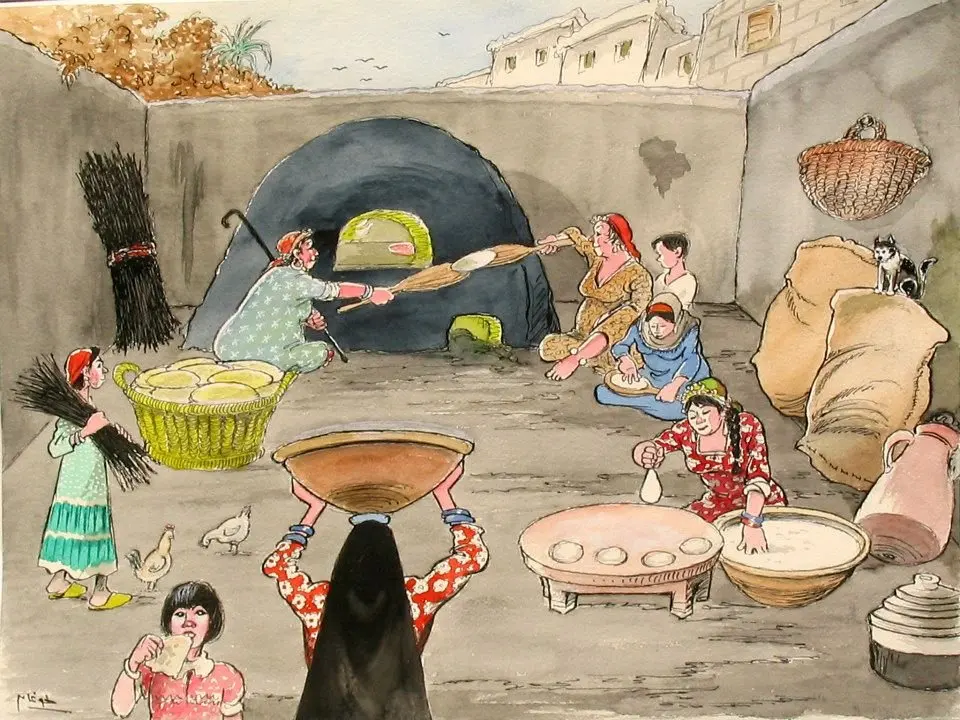
For travellers interested in Egypt beyond the pyramids, there's a genuinely practical hook here: the American University in Cairo has digitised more than 3,000 scans of Toughan's papers and original drawings, free to browse online. Flip through them and you get a crash course in a century of Egyptian politics, street life and humour — a far richer picture than any guidebook summary. Pair it with a visit to AUC's Tahrir Square campus, right beside the Egyptian Museum, and you have a half-day of modern Egyptian history told in ink rather than stone.
Toughan insisted a cartoon was a political act, not decoration. Seven decades on, his archive proves the point — and it's an unusual, rewarding window for any visitor who wants to understand how Egypt saw itself.