Fuel is something most of us think about for about thirty seconds at a petrol station. In communities deep in the Ecuadorian Amazon, it's the difference between a functioning life and a stalled one. Boats that carry kids to school, ambulances, farm machinery, generators, produce heading to market — all of it depends on a reliable supply of gasoline, and for many villages that supply has been patchy, diverted, or simply absent.
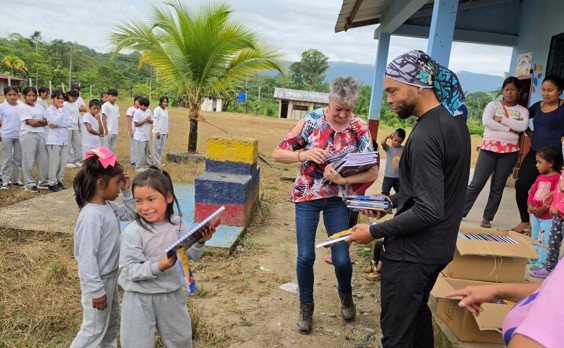
That's the backdrop to an unusual move by Fundación Hogar de Esperanza, a Cuenca-based charity that has been working in Ecuador for years. After months of conversations with Indigenous and rural community leaders in the Amazon, one problem kept surfacing: fuel. So the foundation asked the government for permission to distribute it themselves — and got approval for a trial, starting with an allocation of 2,400 gallons per month.
The idea behind it is more interesting than the logistics. The foundation's argument is that aid to these communities has historically followed a familiar cycle: outside money funds a project, the money runs out, everyone hunts for a new donor. Meanwhile, the Amazon's resources and profits have tended to flow out of the region entirely. By running a fuel distribution business with documented, invoiced, transparent accounting — and reinvesting the profits locally — the charity hopes to turn an everyday necessity into a self-sustaining revenue stream for education, healthcare and agricultural programmes.
The numbers give a sense of scale. At the initial allocation, the foundation estimates roughly $1,700 a month in gross profit. If distribution grows to around 12,000 gallons a month, annualised gross profit could top $100,000. Getting started still requires about $20,000 for storage tanks, equipment and initial fuel stock (the distribution truck is already secured), of which $8,500 has been raised. The foundation is also exploring a longer-term investment option of $50,000 or more with a proposed 5% annual dividend through its Seeds of Hope vehicle.
Fuel is only the first act. Agriculture is the charity's longer-term play, and it has floated tourism as another possible community-run business down the line. The broader principle — money generated in the Amazon staying in the Amazon — is one that anyone who has watched extraction economies hollow out remote regions will recognise.
Why should a traveller care? Because this is the region visitors pass through on Amazon lodges and river trips, and the debate about who actually benefits from tourism and commerce there is live. If Hogar de Esperanza's model works, it points towards a version of community-based enterprise where visitor money and local business genuinely feed the same ecosystem — and where the communities themselves hold the levers. Even if you never buy a gallon from them, the project is a useful lens on what sustainable development in the Amazon could look like.