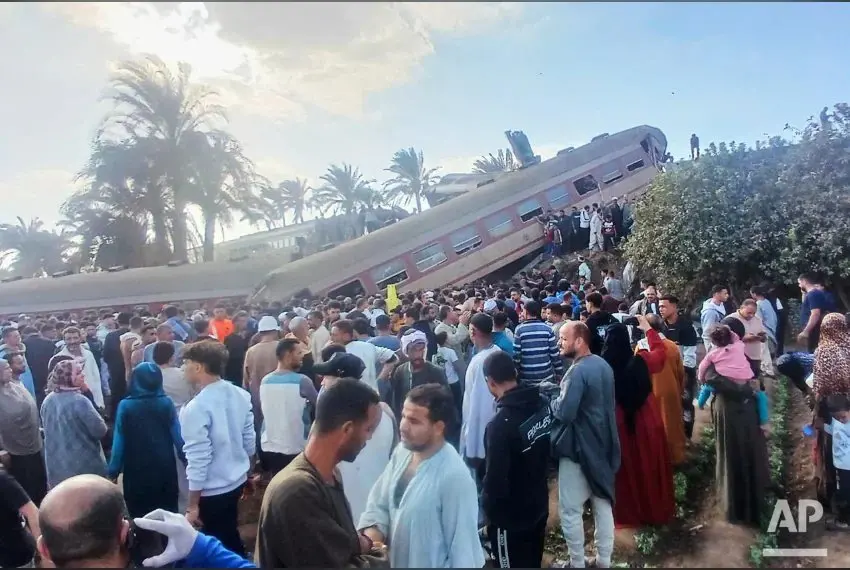
Two passenger trains collided near the town of El-Ayyat, south of Cairo, in an accident Egyptian health officials say killed seven people and injured 110. Several carriages derailed in the crash, which happened when a service travelling from Giza to Faiyum ran into the back of a train heading from Cairo to Aswan — one of the country's main long-distance routes, popular with both locals and tourists heading toward Luxor and Aswan.
Egypt's Ministry of Health confirmed the casualty figures, noting that the number of injured had climbed to 110 as assessments continued. Emergency response details and the cause of the collision were not immediately clear.
Rail travel is a staple of Egyptian tourism, and the Cairo–Aswan line is the backbone of that network: sleeper trains from the capital down to Luxor and Aswan are a common alternative to domestic flights and Nile cruises. Incidents like this one are a reminder that Egypt's railway system has a long record of safety problems, with several serious collisions and derailments over the past two decades often linked to ageing infrastructure and signalling failures.
For anyone planning to travel between Cairo and Upper Egypt, it's worth monitoring official announcements in the days after the crash, as services on the affected stretch may face delays or cancellations while the line is cleared and investigated. Travellers holding tickets on the route should check directly with Egyptian National Railways or their booking agent before setting out.
More broadly, the crash is a practical prompt for travellers weighing up options in Egypt: domestic flights between Cairo, Luxor and Aswan are frequent and relatively affordable, while the Nile cruise circuit remains the most comfortable way to cover the same corridor. If you do plan to take the train — and many do, since the daytime views along the Nile valley are genuinely good — booking the newer sleeper or express services rather than older local trains tends to be the smoother experience.