After more than 600 days of talks, Alaska Airlines and Hawaiian Airlines have reached a tentative joint pilot contract, and the headline number is striking: a 12-year widebody captain would earn a base rate of $493.41 an hour from early 2027, rising to $539.16 by 2030. With most mainline pilots logging 800-1,000 hours a year, that works out to roughly $395,000-$493,000 in base pay. The rate is pegged to match the average of American, Delta, Southwest and United on comparable aircraft, or grow at least 3% annually, whichever is higher. The 4,600 ALPA members vote between December 1 and December 22; if approved, pay scales take effect January 31, 2027 and lock in labour stability through January 2031.
Why should holidaymakers care? Because the contract clears one of the last big labour obstacles to Alaska Air Group's expansion after its $1.9 billion acquisition of Hawaiian in September 2024. The FAA already granted a single operating certificate in October 2025, but pilots still can't fly each other's jets until a neutral arbitrator merges the two seniority lists. Once that happens, the airline can move crews freely between Hawaii and the mainland.
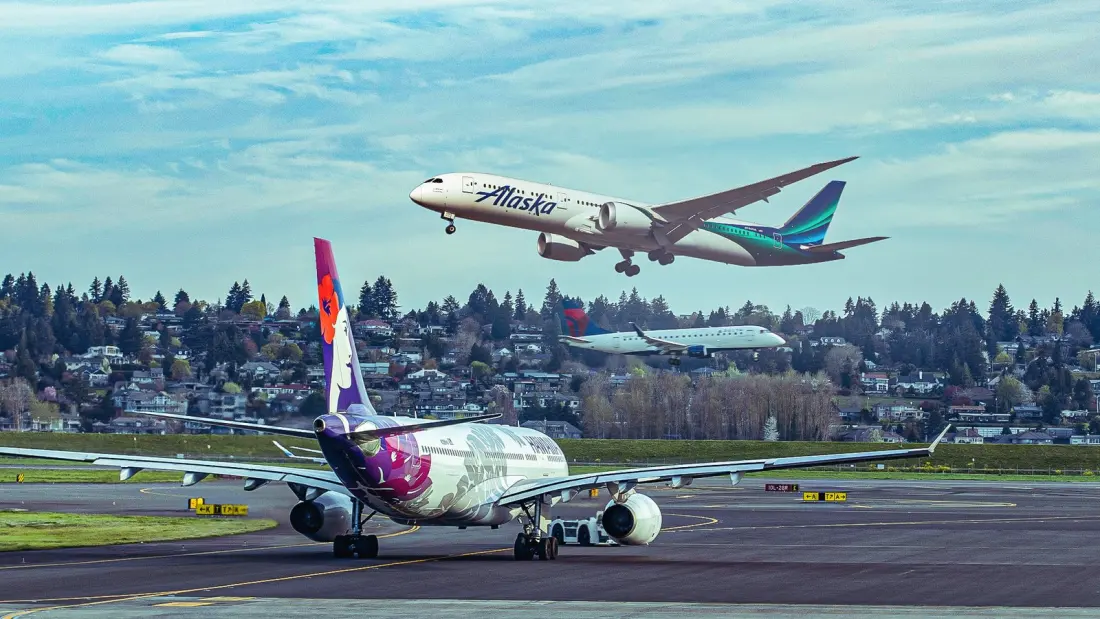
The fleet plans are the real traveller news. From Seattle, Alaska will deploy Boeing 787-9 Dreamliners — up to 17 are expected — on new long-haul routes to Tokyo Narita, Seoul, London, Rome, Paris and Athens, banking on premium fares to offset those top-tier pilot wages. In Honolulu, Hawaiian keeps its 24 Airbus A330-200s, which get a $600 million retrofit from 2028 adding Leihōkū lie-flat suites and premium economy on routes to Tokyo Haneda, Osaka, Sydney, Papeete, Pago Pago and West Coast cities.
Interisland flying is changing too. Hawaiian's aging 717s are being retired, replaced by larger Boeing 737-800s plus new MAX 8 and MAX 10 aircraft — more seats per hop and a single narrowbody type across the whole network, though heavier jets on short island routes bring fuel and wear trade-offs.
The stakes are real: paying legacy-carrier wages across two fleets means Alaska needs to fill those upgraded cabins at profitable fares against fierce Pacific and transatlantic competition. But for travellers, the near-term picture is more premium seats on long-haul routes from Seattle and refreshed cabins out of Honolulu — with the Dreamliner's range opening destinations Alaska could never reach as a narrowbody-only airline. Expect the roughest edges (crew shuffling, scheduling kinks) to smooth out as integration completes through 2026-2027.