Coffee with cheese in it. Tea churned with yak butter. A pudding made by pouring hot milk over ginger juice. Around the world, plenty of cultures treat their hot drinks very differently from the sugar-and-milk norm, and several of them are reason enough to plan a trip.
Start in Hanoi, where cà phê trứng — egg coffee — was invented in 1946 by Nguyễn Văn Giảng, a bartender at the city's Metropole Hotel, when fresh milk was scarce. His fix: whip egg yolks with condensed milk and sugar into a thick cream, then float it over strong robusta. It tastes less like egg and more like tiramisu or zabaglione, and it's served in a small cup sitting in hot water to stay warm. Café Giảng, which he founded, still serves it today.
Colombia has its own beloved oddity: chocolate con queso, hot chocolate with chunks of mild fresh cheese dropped into the cup. The heat softens rather than melts the cheese — queso campesino, doble crema or cuajada — leaving a stretchy, salty-sweet contrast. It's a breakfast and las onces (afternoon snack) ritual in Bogotá, Cundinamarca, Boyacá and Santander, best paired with pandebonos or almojábanas.
Turkey answers winter with salep, a creamy drink made from flour ground from wild orchid tubers, whisked into hot milk and sugar and dusted with cinnamon. Mildly floral and thick as a liquid dessert, it shows up in Istanbul cafes and street stalls from December onwards — and across former Ottoman lands too.
Further east, Tibet's po cha is purpose-built for high-altitude life: strong boiled black tea churned with yak butter and salt until creamy and savoury. It's a calorie-dense fuel source and a gesture of hospitality in Tibetan homes. Ethiopia, widely credited as the birthplace of Arabica coffee, also plays unconventional: in some rural communities, the buna ceremony coffee is brewed in a clay jebena with salt instead of sugar — historically salt was easier to get than sugar — and sometimes enriched with spiced butter.
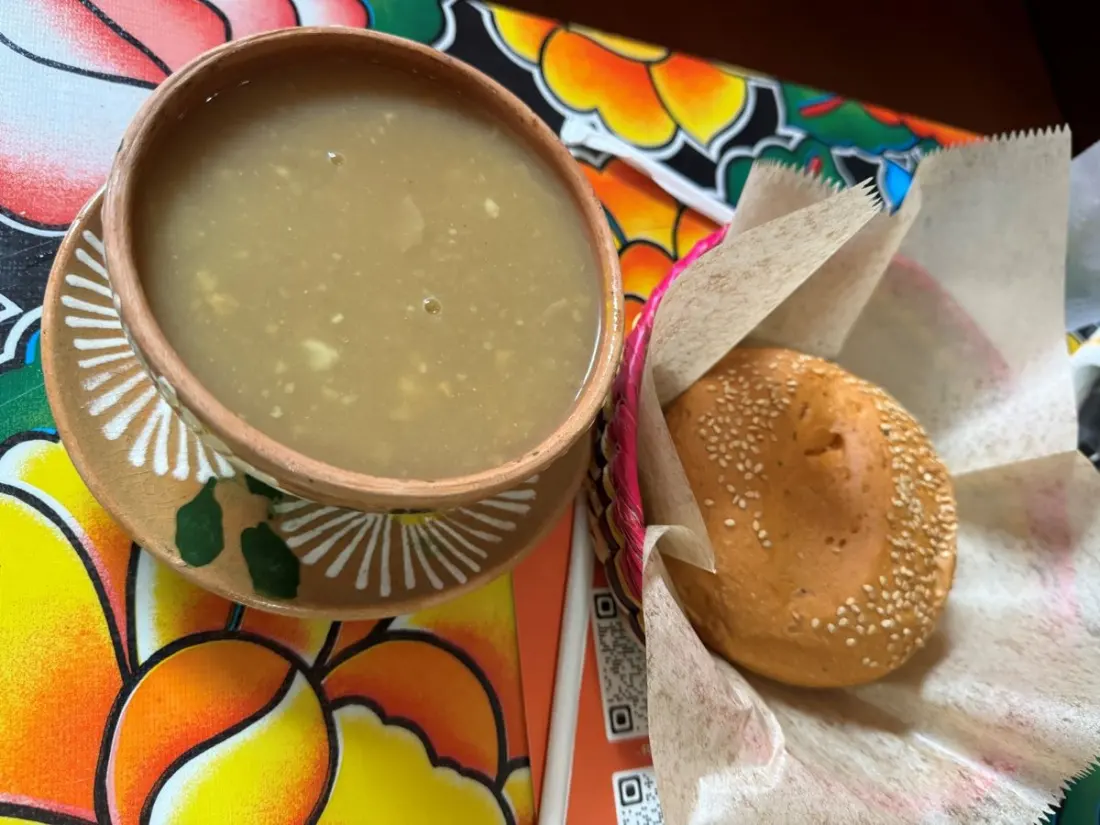
The list rounds out with Mexico's champurrado, a pre-Hispanic corn-and-chocolate drink thickened with corn dough and sweetened with piloncillo, drunk at Christmas, Day of the Dead and alongside tamales; kaffeost from northern Finland and Sámi country, where cubes of squeaky leipäjuusto cheese sit in a wooden cup under boiling coffee; and ginger milk curd from Shunde in Guangdong, China, where ginger enzymes set sweet hot milk into a warm, spoonable pudding.
What makes these worth seeking out is that each one carries a story — scarcity, climate, Indigenous food traditions — in a cup. They're cheap, everywhere once you know to look, and usually best at the places that invented them: a Hanoi cafe, a Bogotá bakery, an Istanbul winter stall. Order one and you'll understand a place faster than any museum visit.