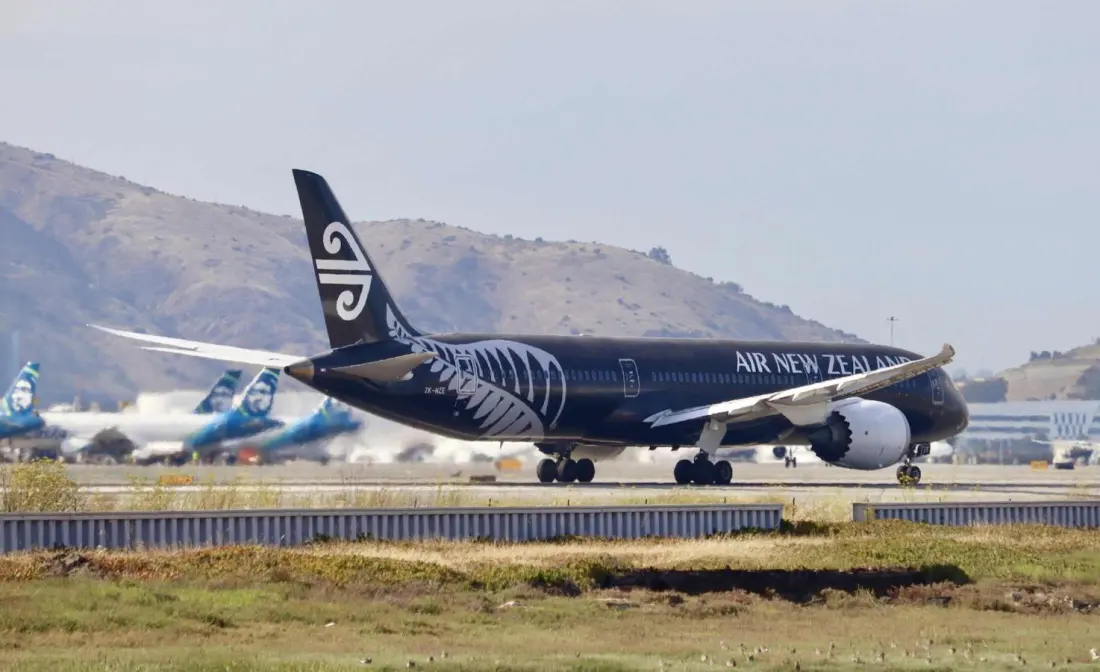
A long-haul flight across the Pacific takes about 13 hours. For passengers booked on Air New Zealand's September 7 departure from San Francisco to Auckland, the wait on the ground stretched even longer: a delay of more than 14 hours, after the airline reportedly had to fly in a fresh pilot from elsewhere in its network.
What happened? According to the San Francisco Chronicle, two Air New Zealand pilots got into an altercation during their layover in San Francisco. New Zealand media suggest the disagreement may have started onboard the Auckland–San Francisco leg and escalated at the layover hotel. The airline has not confirmed that account, saying only that it is investigating "a matter between two crew members off duty in the United States" and stressing that nothing happened onboard the aircraft with passengers present.
Initially, customers were told the disruption was down to pilot "illness" — a framing that aged poorly once local reports of the fight surfaced. Both the September 6 and September 7 SFO–Auckland departures were hit. The crew meant to operate the second flight was apparently pulled forward to cover the delayed first one, leaving the airline short-staffed for its own departure.
Here's why a single replacement pilot couldn't just hop in a taxi to the airport: a Boeing 777 flying trans-Pacific needs a full complement of properly rested, qualified pilots, and mandatory crew-rest rules meant whoever was flown in had to complete a rest period before touching the controls. Add it up and you get a 14-hour delay and cancellations despite an aircraft that was fuelled, catered and ready to go.
New Zealand's Civil Aviation Authority has been notified and is weighing whether regulatory or disciplinary action is warranted. The core issue the airline now faces goes beyond one bad night in San Francisco: if two pilots can't work together safely, fitness-to-fly assessments apply, and the carrier owns the consequences of its employees' conduct — including the knock-on chaos for hundreds of travellers.
For anyone booking long-haul flights, this is a useful reminder of how thin the margins can be on ultra-long routes. There's rarely a spare qualified 777 crew sitting at the gate, so one crew problem can cascade across two days of departures. Travel insurance that covers significant delays, and knowing your rebooking rights, matter more on routes like SFO–Auckland than most passengers realise.
To Air New Zealand's credit, it didn't gamble. Swapping in a rested pilot and eating the delay is far preferable to an unresolved conflict at 35,000 feet over the Pacific — even if the reported reason for it all is both extraordinary and, for the passengers stuck in Terminal I, deeply frustrating.