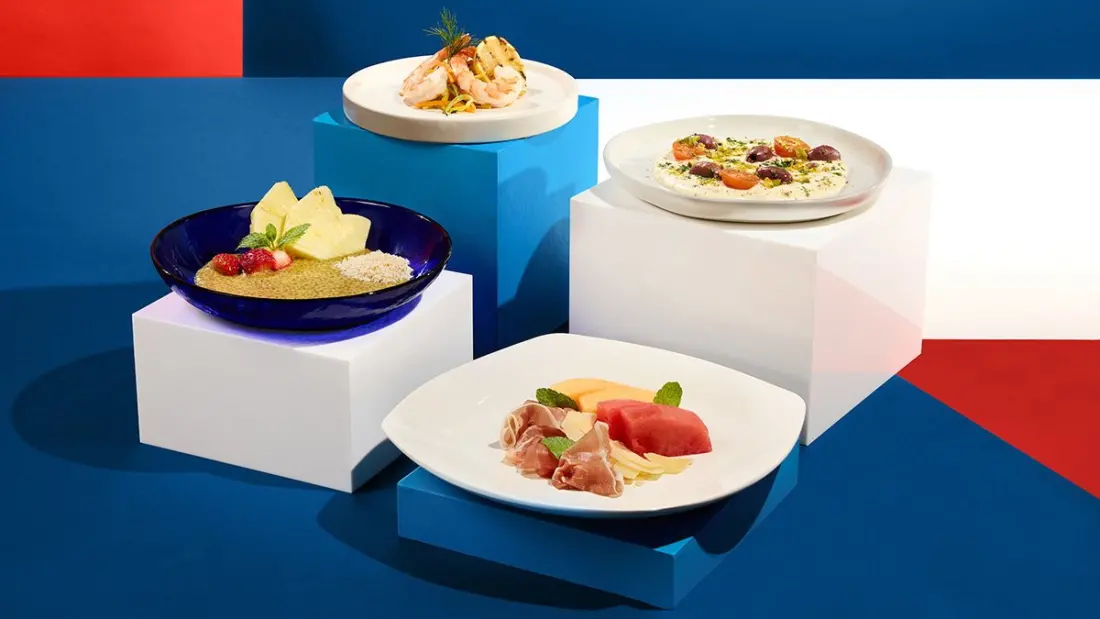
If you've ever flown first class within the US and been handed nothing but a drink and a bag of pretzels, help is on the way — at least on some routes. American Airlines is reviving its "light bites" concept on flights of 700 to 899 miles, which works out to roughly 90 minutes to two hours in the air. It's the first time in about a decade the carrier has offered fresh food on services this short.
The rollout starts this month on American's Chicago O'Hare to New York routes, serving both JFK and LaGuardia. Each flight will carry two rotating options — no pre-ordering, you just take what's on board. Breakfast could be smoked salmon, prosciutto and melon, chia overnight oats, or a fruit and cheese plate. Later in the day, expect things like curry chicken salad, Thai noodle salad, turkey and gouda sandwiches, whipped burrata, poached shrimp with noodles, or mezze plates. It's a genuine step up from the snack basket.
For context, the US big three all currently draw the meal line at 900 miles. Anything shorter gets drinks and packaged snacks, even in the front cabin. With this change, American becomes the only one of the trio to serve fresh food below that threshold — ahead of Delta and United on this particular metric. Alaska Airlines is the only other US carrier doing something similar, so it's a small but notable competitive edge.
It's worth stepping back to see how unusual this is globally. In the Middle East, even a half-hour business class hop might come with a lie-flat seat, champagne and a proper snack. In Europe, short-haul business class is usually just an economy seat with the middle blocked — but you'll nearly always get something fresh, even on a sub-hour flight. The American setup is the reverse: genuinely better seats in a dedicated first class cabin, but a soft product that often lags. This move narrows that gap a little.
Who should care? Anyone booking premium cabins on domestic transcons and trunk routes — think Chicago–New York now, with other 700-899 mile city pairs presumably to follow if the trial lands well. If you're redeeming miles or paying up for first class on a route in that range, the value proposition just improved slightly, and it's a reasonable reason to pick American over a rival when the price is comparable. Frequent flyers on the Chicago–New York corridor get the upgrade first, and the rotating menu should keep repeat trips from getting stale. No word yet on when or whether the concept expands, so check the service on your specific flight if a meal is why you're booking up front.
Story reported by One Mile at a Time.