
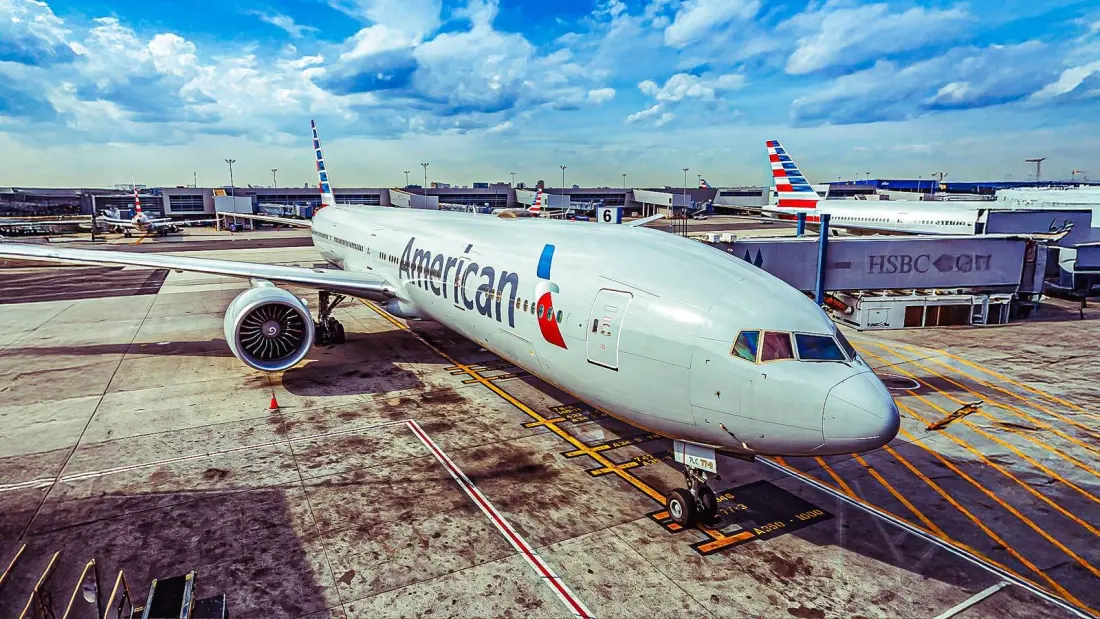
American Airlines filled just over 85% of its transatlantic seats in the 12 months to June 2026, according to Cirium data analysed by Simple Flying. But a handful of routes dragged that average down — and 11 corridors across the North Atlantic dipped below the 80% mark, which is a useful signal for anyone hunting a quieter cabin or a better shot at an upgrade.
The emptiest route of all was Raleigh-Durham to London Heathrow, averaging just 73.3% occupancy. In fact, the four weakest performers all served the UK: New York JFK to Edinburgh came second at 74.78%, followed by JFK to Heathrow (75.98%) and Boston to Heathrow (76.29%). The Heathrow pattern is striking, given it's one of the most hotly contested airports on the Atlantic, with Delta, United, British Airways and Virgin Atlantic all fighting for the same passengers.
Beyond the UK, the sub-80% list reads like a tour of American's secondary gateways. Charlotte to Munich (77.13%) and Charlotte to Frankfurt (78.73%) underperformed, as did Los Angeles to Heathrow (77.57%), Philadelphia to Zurich (78.46%) and Philadelphia to Amsterdam (79.38%). Dallas/Fort Worth to Zurich (79.82%) and Las Vegas to Heathrow (79.96%) just scraped in — the Vegas route only ran a handful of seasonal flights around CES 2026.
Contrast that with the other end of the table. Chicago O'Hare to Athens topped the charts at 93.62% full, with Dallas/Fort Worth to Madrid (92.31%) and Rome (92.29%) close behind, plus Miami to Madrid at 92.06%. Southern and Mediterranean destinations are clearly where the demand is.
Why should a traveller care? Full flights mean pricier fares and stingy upgrades; emptier ones often mean the opposite. If you're flexible, routes like Raleigh-Durham or Boston to Heathrow, or Philadelphia to Zurich and Amsterdam, are the kind of corridors where premium cabin award space and discounted business fares tend to show up. It also hints at where American might trim or retune capacity — the airline isn't shy about cutting routes that consistently fly half-empty. The Edinburgh service, though, has a fan in high places: network planning SVP Brian Znotins called the Airbus A321XLR flying it "the right aircraft" for the New York–Scotland link, so that one seems safe for now.