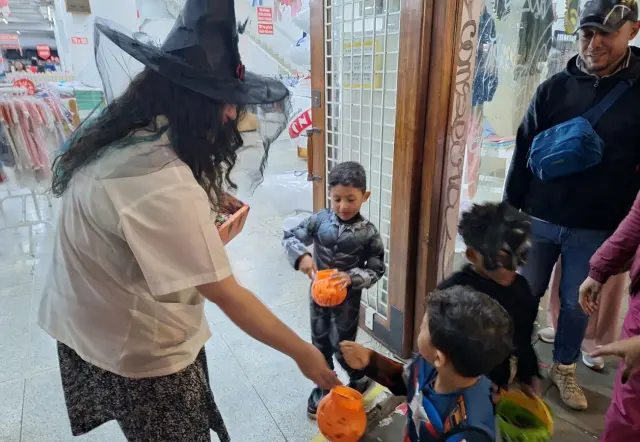
While much of the world associates 1 November with sugar skulls in Mexico or trick-or-treating leftovers, Colombia's Caribbean coast has its own tradition — and it ends with everyone eating from the same pot. Día de los Angelitos, also called Ángeles Somos ("We Are Angels"), is celebrated every 1 November, coinciding with All Saints' Day, when children take over the streets of towns across the region singing traditional verses door to door.
The custom dates back to the colonial period, blending Catholic beliefs with local folk practice, and has survived mainly through oral tradition rather than any formal institution. The signature verse announces the children's arrival: "We are angels, we come from heaven, asking for souls for ourselves." And just like trick-or-treating elsewhere, there's a playful penalty for households that don't come through — a teasing rhyme along the lines of "this house is made of needles, where all the witches live."
Each town puts its own spin on the day. In Atlántico department towns like Manatí, children carry bags and containers to collect sweets — though older generations remember collecting cassava, panela, corn, sugar cane and fruit instead of candy. In Barranquilla, the Catholic Church runs "Angelitos por la Paz", pairing the neighbourhood rounds with music, games and religious activities.
Cartagena does things differently, and arguably most memorably. Its version, known as the tintilillo and recognised as part of Colombia's national cultural heritage, swaps candy-hunting for something far more communal. On the morning of 1 November, children (and plenty of adults) walk the barrios carrying pots and utensils, singing for ingredients: yam, cassava, plantain, potatoes, rice, vegetables — and, depending on what a household can spare, meat or chicken. Everything gathered goes into one giant sancocho, the thick traditional stew, cooked and shared by the whole neighbourhood. The point isn't the meal so much as who's around it: everyone contributes what they can, so families of any budget take part on equal footing.
For travellers, this is a genuinely local experience rather than a staged festival — there are no ticketed events, just neighbourhoods doing what they've done for generations. Visit in late October and you'll have Cartagena's Walled City, Barranquilla (worth scouting ahead of its famous February carnival) and the Atlántico coast almost to yourself, well before peak December crowds. If you're in Cartagena on 1 November, ask locally where a tintilillo round is happening — being invited to share a sancocho with a barrio is about as authentic as Colombian Caribbean culture gets.
The tradition's endurance says a lot about the region: a centuries-old custom that survived on word of mouth, teaches kids about sharing and gratitude, and turns a religious holiday into a neighbourhood block party with soup at the centre.