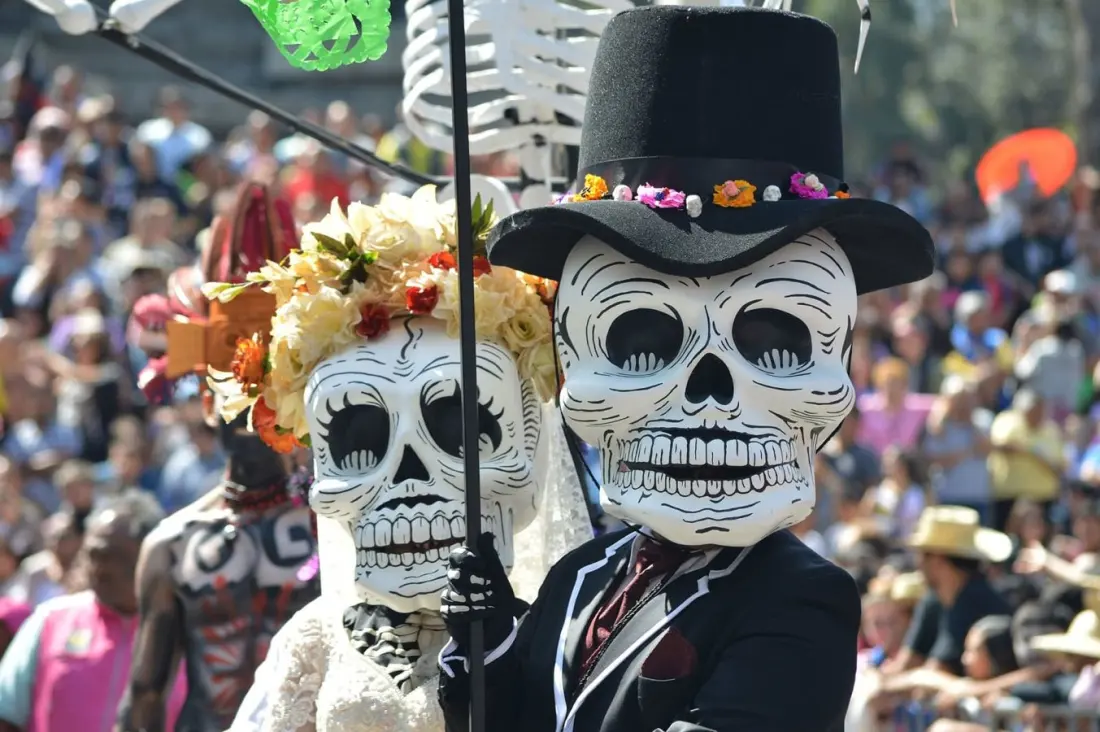
Every 1-2 November, Mexico smells of cempasúchil marigolds, copal incense and fresh pan de muerto. Altars loaded with photographs, candles and favourite foods appear in homes, schools and cemeteries, welcoming back the departed. UNESCO added the celebration to its Intangible Cultural Heritage list in 2008 — but what happens outside Mexico is just as interesting for travellers.
The tradition itself is a blend. Long before the Spanish arrived, the Mexica, Maya, Purépecha and Totonac cultures honoured their dead, believing spirits could return to spend time with the living. Colonial-era Catholicism folded those beliefs into All Saints' Day and All Souls' Day, producing something uniquely mestizo: a festival that treats death not with fear but as a natural part of life. Every element on an ofrenda means something — candles light the way home, marigold petals mark the path, papel picado stands for the wind, water quenches the traveller's thirst, and the food reflects what the person loved in life.
That spirit has spread across the continent, pushed along by migration, media and films like Coco (2017) and The Book of Life (2014). Guatemala's Sumpango and Santiago Sacatepéquez fly enormous hand-painted kites over cemeteries to connect with spirits. In Bolivia, families adorn human skulls — the ñatitas — with flowers and cigarettes. In Peru, Ecuador and Nicaragua, relatives clean graves, share meals and play music beside their dead.
Colombia offers some of the best examples of how the tradition gets localised. In Bogotá, Medellín, Cali and Barranquilla, universities and cultural groups now stage altar contests, exhibitions and festivals, with crowds queueing for Mexican-themed events in the capital. But the country has its own deep-rooted customs too: in Nariño, families decorate graves and share food; on the Caribbean coast, novenas de difuntos mix prayer with song; in Antioquia and the Coffee Axis, 2 November stays firmly religious, with masses and candlelit processions. The result is a hybrid you can actually taste — Colombian altars might pair mazamorra and tamales with pan de muerto, and yellow blooms stand in for the marigold.
For travellers, early November is one of the most rewarding windows to visit Latin America. You don't need to be in Mexico City or Oaxaca (though both are spectacular). Guatemala's kite festival, Bolivia's ñatitas ceremonies or a cemetery evening in rural Colombia offer the same mix of solemnity and celebration with fewer crowds. Just remember the tone: this is remembrance, not a costume party — photograph respectfully, ask before joining family gatherings at a graveside, and treat cemeteries as living community spaces, which is exactly what they are on these nights.