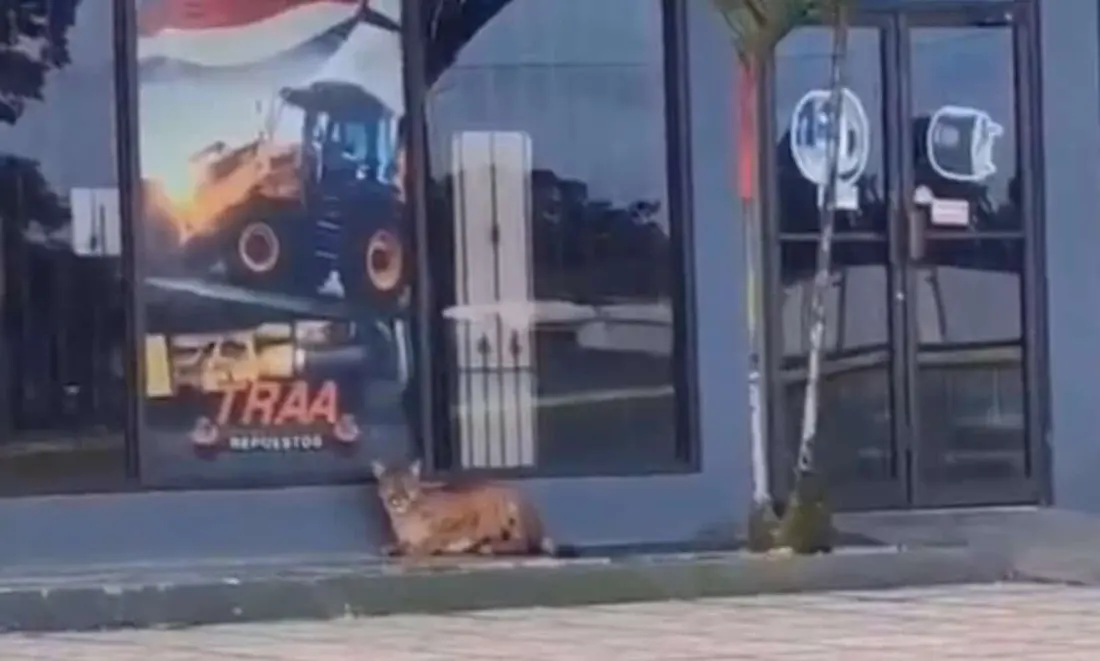
A puma with broken legs was rescued early Wednesday in Guápiles, on Route 32 — the busy highway that links San José with the Caribbean port of Limón. Firefighters got the call at 6:25 a.m. and found the big cat near a store front along the road, apparently hit by a car. Police held onlookers back while a SINAC veterinarian sedated the animal, and it was sent to Toucan Rescue Ranch for evaluation, with a transfer planned to the National University's wildlife hospital in Heredia.
The rescue is a stark reminder of a wider problem. Route 32 cuts through nine protected areas, including Braulio Carrillo National Park and seven biological corridors, and studies from roughly a decade ago estimated more than 1,200 wild animals were dying on it every year. The highway's widening came with an environmental permit requiring 31 underpasses and 20 canopy bridges. So far, only two of those bridges exist, according to the National Roads Council (Conavi) — six are under construction and 12 remain unbuilt, years past the Constitutional Court's 2024 deadline.
It's not just Costa Rica's big cats at risk. The Las Pumas Rescue Center counted 76 wild cats struck on the country's roads in 2025 — mostly ocelots, plus jaguarundis, pumas, margays and one jaguar — with 88% dying on the spot. Nationwide, researchers estimate four wild animals are killed by vehicles every hour.
Even the crossings that exist may not help. A six-month study of Routes 1 and 160, run by Panthera Costa Rica with Inter-American Development Bank support, found pumas, margays, jaguarundis, peccaries and armadillos never used the structures at all. The takeaway: bridges and underpasses only work alongside exclusion fencing, maintenance and monitoring as a complete system. A new law published in September requires exactly that — wildlife crossings on new projects and on upgrades to existing roads — with ministries, municipalities and SINAC required to coordinate.
For travellers, this matters in a practical way. Route 32 is the main route to the Caribbean coast — Tortuguero, Puerto Viejo, Cahuita — and it's exactly where wildlife encounters happen, often at dawn or dusk. Slower speeds aren't just courteous; they give you time to react to animals that appear without warning. And if you do come across an injured animal on any Costa Rican road, don't approach or move it — call 1192 or 911 for trained responders instead. Driving the country's scenic corridors comes with a share of responsibility for the wildlife that lives along them.