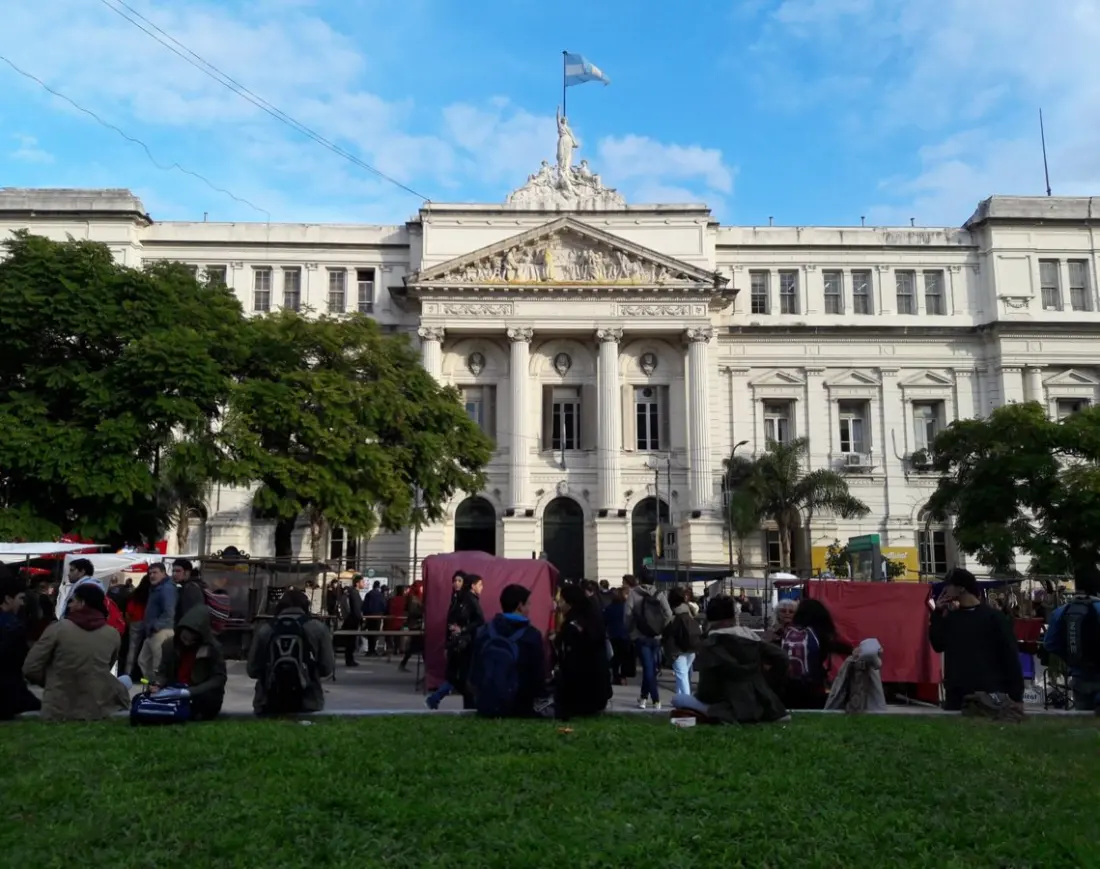
Nicolás Andrés Pozdzik teaches Economic History and Society and State at the University of Buenos Aires, one of Latin America's most respected institutions. After a 20-hour teaching week, he collects about 550,000 pesos — roughly US$362. So the 41-year-old sociologist spends his other working hours behind the wheel of a ride-share car. He says the extra shifts cost him his weekends with his children, and that even doubling his teaching hours would leave him earning about US$725, well below Argentina's basic poverty line of roughly 1.65 million pesos (around US$1,055).
His story has become a symbol of a much wider problem. Argentine university professors typically earn between US$400 and US$800 for a 20-hour week, depending on rank. Sergio Romero, who leads the Argentine Teachers' Union (UDA), says it is common for educators to pick up side work driving taxis or Ubers. Pozdzik's colleagues supplement their income with private tutoring and other gigs.
The immediate backdrop is President Javier Milei's austerity drive. In 2024, Milei vetoed a university financing law that would have tied teachers' salaries to inflation. Since then, staff and students have protested repeatedly. On Tuesday, universities nationwide held a 24-hour strike, and UBA began a rotating stoppage across its faculties running until October 22. Late last week there was a flicker of hope: a judge ordered the government to comply with the financing law — the second such ruling, after a December 2025 decision that suspended Milei's decree and demanded immediate inflation-linked salary adjustments. The administration has so far ignored both court orders, though FEDUN's secretary general Daniel Ricci points out that two branches of government now back the unions' position.
For travellers, why does this matter? Argentina remains one of South America's most rewarding destinations — Buenos Aires's bookshops, cafés and grand public buildings are inseparable from its fiercely defended free public university system, founded on the idea that education should be open to everyone. If you're visiting the capital, you'll likely notice the mobilisations: marches along Avenida de Mayo, campus pickets and union flags are part of the current cityscape. They are generally peaceful and rarely disrupt tourists, but it's worth checking whether museums or faculties tied to strike action have altered opening hours, and building flexibility into any itinerary around Congress or the Recoleta university district.
The dispute also says something about the Argentina you'll encounter — a country where a lecturer can't cover the rent on a professor's salary, where inflation has normalised juggling several jobs, and where public services are being squeezed in ways locals talk about openly. Conversations with porteños will often circle back to it.
Pozdzik, for his part, isn't quitting either job or the fight. He describes what's happening as an ideological push against education, science and technology, and says staff are prepared to keep resisting it.
This story was reported by Argentina Reports.