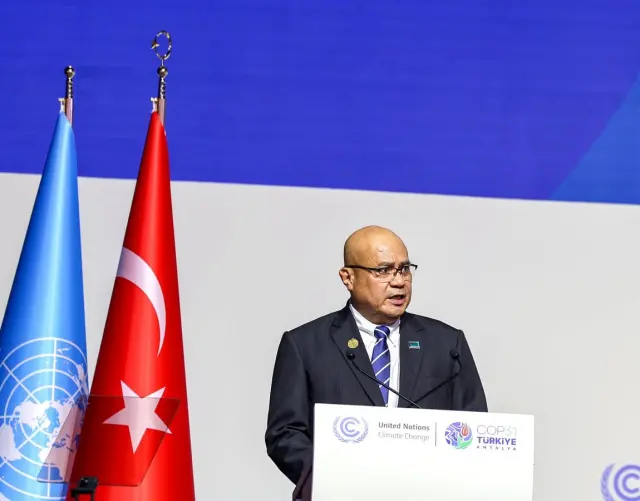
Fiji's capital Suva is set to become the Pacific's hub for climate finance, but the news framing this week is far less comfortable: IPCC chair Jim Skea told a COP31 event in Antalya that the world's carbon budget is nearly spent and warming is closing in on the 1.5°C threshold that small island states fought so hard to embed in the Paris Agreement.
The numbers are sobering. Under current policies, the UN Environment Programme's latest emissions gap report points to about 2.8°C of warming by 2100. Fully delivered national pledges get that to 2.6°C; net-zero promises, if kept, 2.1°C. Keeping 1.5°C within reach now means letting temperatures overshoot slightly, peak, then claw back down by century's end — a path that depends heavily on pulling carbon dioxide back out of the atmosphere, a technology whose scalability scientists still can't guarantee.
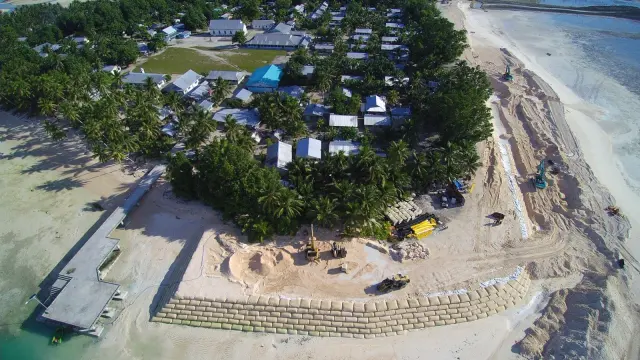
For anyone who loves the Pacific, the stakes are concrete: rising seas threatening coastal communities and low-lying nations, plus heat, storms and drought already hitting vulnerable regions hardest. Skea was blunt that some damage can't be undone — sea-level rise continues for centuries even if temperatures fall, and a species lost stays lost.
Meanwhile, Suva will host the Green Climate Fund's new Pacific sub-regional office, signed off at COP31 by Fiji's environment minister Lynda Tabuya and GCF executive director Mafalda Duarte. The idea is simple: bring the fund closer to Pacific island states so climate money flows faster to the places that need it most, with backing from Pacific Islands Forum leaders.
There's a broader Pacific story in play too. A new US grant package worth $450 million is headed to Palau, Micronesia and the Marshall Islands under the Compact of Free Association, while the US Coast Guard joined a multinational maritime security exercise in New Zealand. Retired US Marine colonel Grant Newsham, in an interview with the Pacific Island Times, argued Beijing's growing footprint across Oceania is a deliberate long-term strategy with real implications for regional security and supply chains — a reminder that the islands travellers dream about are also contested strategic ground.
Elsewhere in the region: fisheries officials met in Port Vila over Pacific tuna stocks, Fiji's cabinet approved a $400 million guarantee for renewable energy via Energy Fiji Limited, a Vanuatu woman won international recognition for a solar scheme aimed at reducing violence, and the Marshall Islands earned a global health award for its community-led tuberculosis programme.
Why should travellers care? Because the Pacific's appeal — reefs, low-lying atolls, coastal villages — is exactly what climate change puts at risk, and the region's response is accelerating in real time. Visiting now, spending locally and choosing operators with genuine environmental commitments does more good than most travellers realise. Fiji, with the new GCF office and a renewable energy push, is positioning itself as the region's climate capital as well as its holiday heartland.