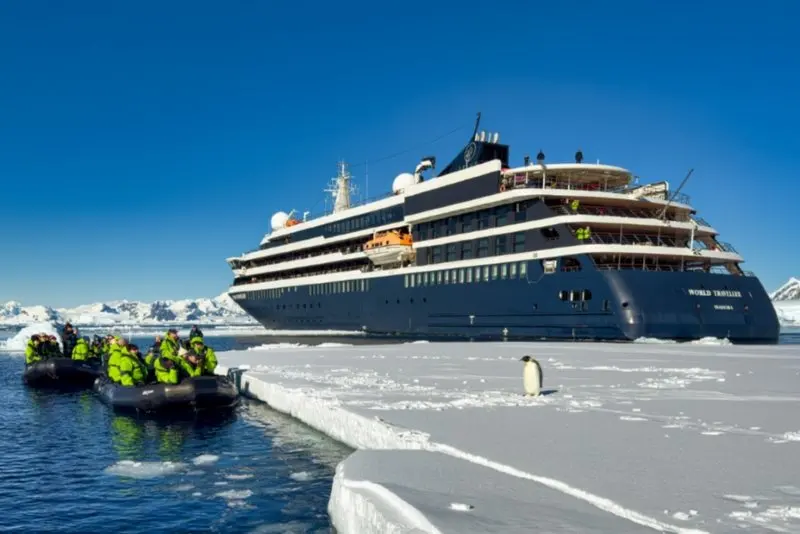
The Antarctic cruise season is about to get underway, and Mystic Cruises is deploying its entire trio of expedition ships to the White Continent. The 2026-27 programme runs through to March 2027, with the World Navigator first in line on November 8, the World Voyager following on November 10 and the World Traveller starting its season on November 21.
The logistics behind the start-up are considerable. The World Voyager is due in Ushuaia — Argentina's southern gateway port and the departure point for most Antarctic sailings — on November 6, with the World Navigator arriving the day after. Meanwhile, the World Traveller is spending a full week mid-Atlantic as it repositions southwards.
Backstage, crews are checking Zodiac landing craft, expedition gear and embarkation procedures, alongside the less glamorous but essential work of medical readiness, communications, navigation and provisioning for guests and staff.
One thing Mystic Cruises is keen to underline: Antarctic itineraries are never set in stone. Routes, landing sites and Zodiac outings shift frequently depending on weather, sea state, ice conditions, wildlife behaviour and operational needs. On each sailing, the Expedition Leader and Assistant Expedition Leader sit down with the ship's Master and bridge team to assess wind, ice and conditions at each proposed landing spot before anyone sets foot ashore.
There's a biosecurity element too. As a member of the International Association of Antarctica Tour Operators (IAATO), the line operates under that body's strict guidelines, which cover wildlife-distancing rules and biosecurity procedures. For the 2026-27 season specifically, IAATO has added precautions around avian influenza and other wildlife diseases — worth knowing if you're booking, since it may affect how closely you can approach penguin colonies and other wildlife.
For travellers weighing up an Antarctic trip, this is a useful snapshot of how the season shapes up. Small expedition ships like these typically carry far fewer passengers than big-ship cruises, meaning everyone tends to get off the boat at landing sites rather than rotating in shifts. Departing from Ushuaia usually means a two-day crossing of the Drake Passage each way — famously choppy, so pack seasickness remedies and book a cabin mid-ship if you're prone. Flexibility isn't just the operator's problem: the best expedition travellers are the ones who embrace the fact that a morning plan can change by lunchtime. In return you get landings that follow the ice and the wildlife rather than a rigid schedule, which is precisely the appeal of going to Antarctica in the first place. If a 2026-27 berth appeals, late-season sailings in February and March often bring the best whale-watching, while November offers pristine snow and courtship season for penguins.