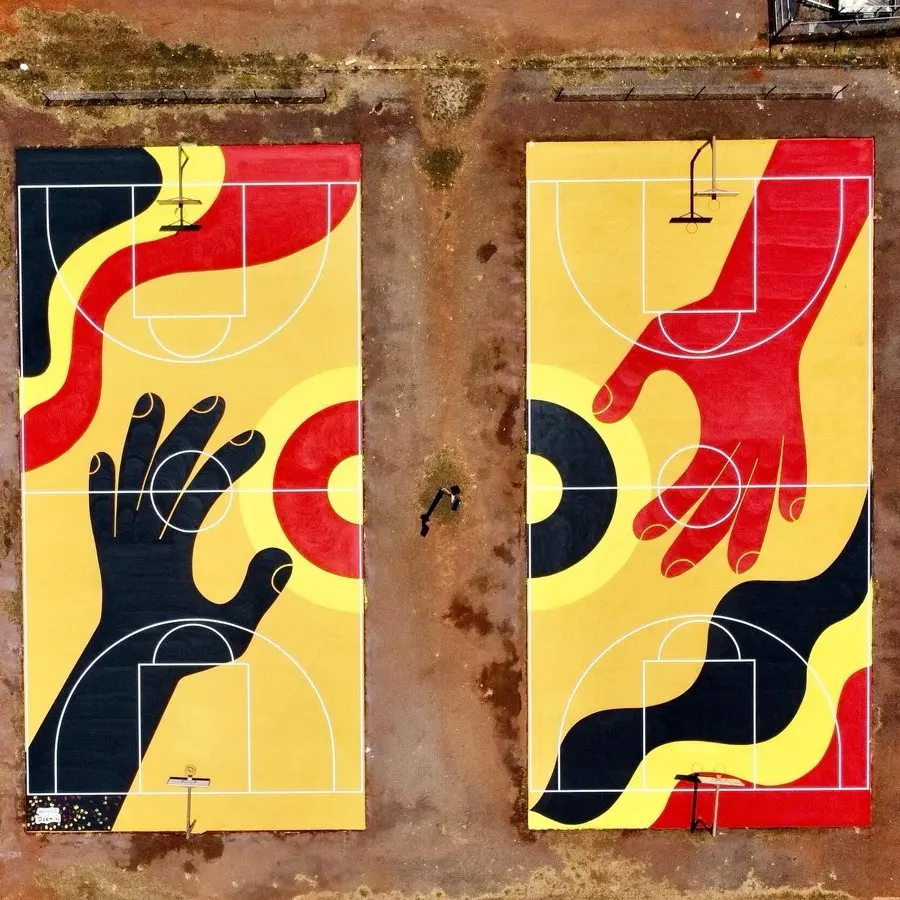
Darwin has a reputation as a stepping-off point for the Top End's wild national parks, but the Northern Territory's capital is worth lingering for in its own right — particularly if you care about art. The city mixes contemporary and experimental work with one of the world's richest living Indigenous art traditions, and two locals recently shared where to find it.
Shaun Edwards grew up across Darwin, Arnhem Land and Katherine before returning home during Covid to launch House of Darwin, a social enterprise clothing brand that reinvests profits into grassroots projects in remote Indigenous communities. His Knuckey Street store doubles as a showcase for Territory-made furniture, sculptures and bush-dyed textiles. For gallery-hopping, he points to the Museum and Art Gallery of the Northern Territory (MAGNT) for Indigenous art and culture, the artist-run Tin Shed Gallery back in the CBD for experimental work, and the Laundry Gallery — which he calls a genuine game-changer — for shows by emerging and established Indigenous and contemporary artists. Indigenous-owned Going North also runs events through the year.
Timing matters. Edwards recommends visiting in the dry season, May to October, when the weather is at its best and the city's events calendar fills up. That's also when Darwin's beloved markets run at full tilt: Mindil Beach Sunset Market on Thursdays and Sundays, Rapid Creek at weekends, and Parap Village Market on Saturdays. The food leans strongly Asian, a legacy of Darwin's geography. And don't skip sunset — he rates East Point at Fannie Bay among the best sunset vantage points in Australia. When you're ready to leave town, Kakadu, Litchfield and Arnhem Land are all within reach, and boat trips to the Tiwi Islands for art, culture and famously passionate local football should be booked ahead.
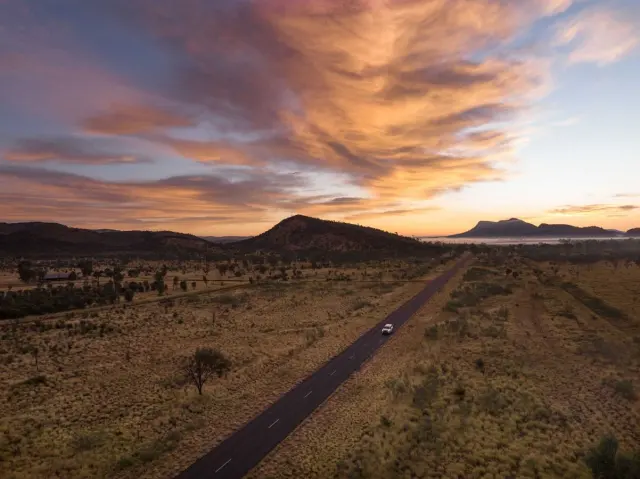
Roughly 1,500km south, at Ayers Rock Resort near Uluŕu, Wendy Hill runs the Gallery of Central Australia (GoCA), which sells work ethically on behalf of hundreds of artists from 23 Indigenous art centres across the Central and Western Desert region — with artists setting their own prices. Visitors can meet artists in residence and watch a piece being painted before buying it. Nearby, the Cultural Centre inside Ulúru-Kata Tjuṯa National Park houses two more galleries, Walkatjara Art Ulúru and Maṯuku Arts.
The desert after dark is its own attraction. Bruce Munro's Field of Light spreads 50,000 solar-powered lights across the red earth, and the "A Night at Field of Light" experience pairs a bush-food dinner with a starlit walk through the installation. Sunrise Journeys tells a connection-to-Country story from a female Aṉangu perspective using light and sound, while the region's famously clear skies make stargazing tours like Outback Sky Journeys a genuine highlight — or you can simply look up. Hill's advice on sunrises and sunsets at the rock: unmissable.
For travellers, the draw here is straightforward: this is one of the few places where you can buy Indigenous art directly and ethically from the artists and communities who make it, then see the landscapes that inspire it. Singapore Airlines connects London and Manchester to Darwin via Singapore, with stopover options en route. Full tips via Wanderlust.