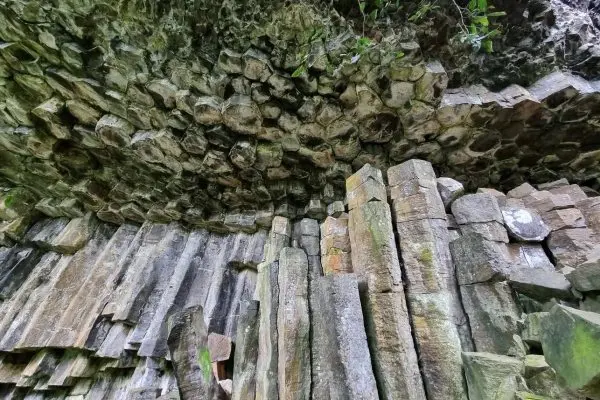
On 7 September 1936, the last known thylacine died in a cage at Beaumaris Zoo on the Queens Domain, just north of Hobart. The likely cause: neglect and cold exposure. A year later the zoo shut for good, and today the site is a scatter of crumbling enclosures and rusting bars — a ghost zoo you can still visit.
The zoo's origin story is more remarkable than its ending. It began as the private collection of Mary Grant Roberts, a Hobart socialite who built a substantial zoo on her Battery Point estate from around 1880. With no scientific training, she became the leading authority on Tasmanian devils and thylacines, bred devils in captivity before anyone else, and earned election to the Zoological Society of London in 1910. She was also a genuine animal welfare pioneer, founding the Anti-Plumage League against the feathered-hat trade and opening her zoo for RSPCA fundraisers.
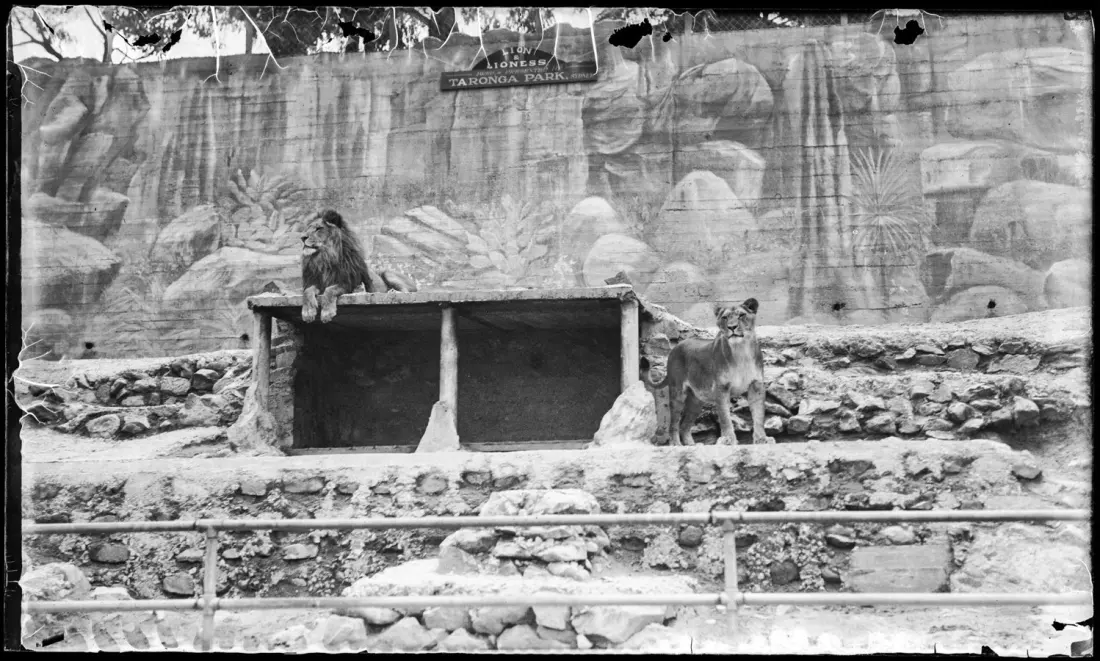
After Roberts died in 1921, her family handed the animals to Hobart City Council, which moved them to a new public zoo in the Queens Domain, opening in 1923. Under curator Arthur Reid, a Scottish taxidermist more enamoured with exotic species than local wildlife, the zoo acquired lions, leopards, a polar bear, an elephant and zebras. Its unlikely celebrity was Mike the leopard, hand-raised by Reid's daughter Alison after his mother ate his twin. Photos of the pair ran in papers across Australia.
But the good press didn't last. Letter writers savaged the zoo's cramped, dark cages — critic John F. Hinde wrote that animals were 'sentenced for life' in spaces with no earth or sky. Visitors behaved badly too: within two years of opening, a spider monkey died after swallowing a hand mirror a visitor gave it, and an ostrich died after a man jabbed its neck with a stick. Money problems compounded everything. By 1926 ticket sales of £2,177 couldn't keep pace with rising costs; feed was cut, animals were sold (Jumbo the elephant went to Auckland Zoo as Rajah), and in 1932 a lion and a leopard were simply shot to save their 2s 6d daily keep. The zoo was losing £1,500 a year by 1935.
Reid resigned that December and died two weeks later. The zoo limped on until 1937, and the site later served as a naval fuel depot in World War II — though several original enclosures survive.
Why should travellers care? The Queens Domain remains one of Hobart's stranger walks: a short hop from the city centre where you can stand among the remains of the cages that held the last of a species. National Threatened Species Day, marked every 7 September, commemorates the thylacine's death here, and it pairs naturally with the Thylacine displays at the Tasmanian Museum and Art Gallery downtown. For anyone interested in conservation history — or just an atmospheric, slightly haunting detour — it's a piece of Tasmania's story that's quietly hiding in plain sight.
Story sourced from Australian Geographic.