
Antarctic cruising is often about ticking off the seventh continent. Aurora Expeditions' 2026-27 season adds something more interesting: the chance to work alongside the scientists actually studying it.
The Australian expedition operator has unveiled 27 voyages across three ships — the Greg Mortimer, Sylvia Earle and Douglas Mawson — running from nine to 34 days. Itineraries cover the full sweep of the far south: the Antarctic Peninsula, the Antarctic Circle, the Weddell Sea, South Georgia, the Falkland Islands, the Ross Sea and East Antarctica. That range matters if you're choosing between a shorter peninsula introduction and a true deep-south crossing.
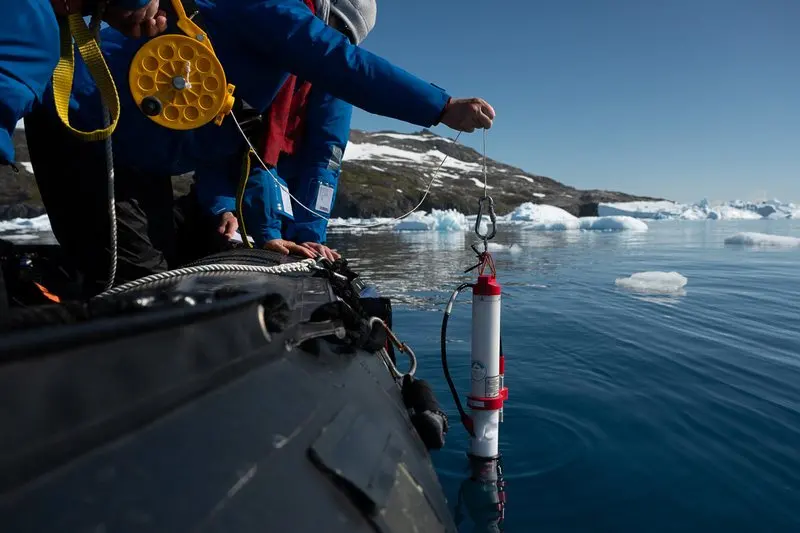
The headline feature this season is science at sea. On 11 of the 27 voyages, the ships double as fieldwork platforms for 18 researchers spread across five projects. On whale-focused sailings, the Friedlaender Lab from the University of California, Santa Cruz will study whale ecology and health using drone imagery and minimally invasive sampling — passengers get a front-row view of techniques you'd normally only read about. Penguin fans get the Oceanites team, whose six scientists continue the long-running Antarctic Site Inventory, tracking penguin numbers and breeding activity on the peninsula with ground and drone surveys.
There's more beyond the charismatic megafauna. Researchers from the Institute for Marine and Antarctic Studies in Tasmania will monitor wildlife disease and climate impacts on whales, seals and seabirds, while Reef Life Survey teams run standardised underwater biodiversity work. Arguably the most intriguing sailing is Epic Antarctica: Crossing the 7th Continent, where scientists from New Zealand's Te Papa museum and Auckland University of Technology pursue Project ESCA — deep-sea exploration in the hunt for knowledge around the colossal squid.
For travellers, this changes the texture of the trip. Zodiac landings and iceberg viewing are still the core of any Antarctic expedition, but having working scientists aboard means talks, deck sessions and the odd chance to help with real data collection rather than simply sightsee. If you've been hesitating over which operator to book, an itinerary where the ship is contributing to genuine research is a meaningful differentiator — and the longer voyages that carry the deep-sea and Ross Sea programmes suit travellers with time and budget to spare.
Aurora Expeditions
(Prices and departure dates weren't detailed in the announcement; expect the usual Antarctic season window from roughly November to March, with early-season itineraries best for pristine ice and late season for whale activity and fluffy penguin chicks.)