Day 27 of a Camino de Santiago pilgrimage turned out to be one of the toughest and most rewarding yet: a 13.7-mile push from Herrerías to Fonfría, much of it climbing through a trail so old it's worn twenty feet into the earth. Total distance walked so far: just over 393 miles.
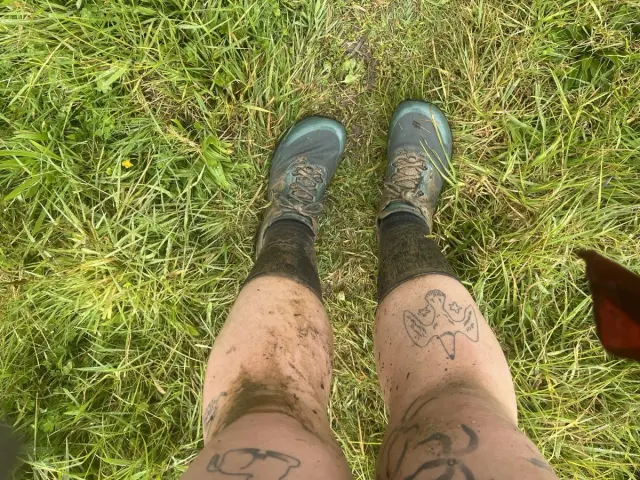
The day started at 7 a.m. to beat a record European heatwave — with no air conditioning in the lodgings, sleeping was rough. The first four miles required a 2,000-foot ascent, following a bubbling creek up a narrow paved road and then into deep forest. Here the Camino shows its age in a striking way: the path is sunken so far into the hillside that dirt walls tower up to 20 feet high, buttressed by ancient stone retaining walls and bordered by massive trees with trunks 15 feet around. The writer likened it to the Appalachian Trail — except this route has been in use for over a thousand years.
The climb passes through La Faba, a medieval village built into the mountainside, where stone farmhouses stack cow barns below and living quarters above. Unusually, hikers can book horseback rides up this steep section — noted as a bucket-list option for a return trip. Higher up, the trail opens into rolling alpine meadows with cowbells clanging in the distance, then a café stop in the tiny hamlet of Laguna for coffee and fresh orange juice. The day also marked a milestone: crossing into Galicia, the province that carries pilgrims to Santiago.
By 10 a.m., they reached O Cebreiro — greeted by a bagpiper in a kilt. The village is famous for its pallozas, Celtic-style oval stone houses with thatched roofs, and its humble parish church, which proved more moving than the grand cathedrals seen earlier on the route. A short detour brought them to Alto San Roque, where a 10-foot bronze pilgrim statue faces the wind, its feet taped with bandages by passing walkers in homage to blister season.
The finale was a brutally short climb — two-tenths of a mile at a gradient of roughly 1,500 feet per mile — rewarded by a bar right on the trail at Alto de Poio serving pasta, steak, Galician almond cake and, when two glasses of wine were ordered, a whole bottle. The night ended in Fonfría, a working medieval village with manure-dotted cobbled streets, hand-washed laundry drying in the sun, and a home-cooked dinner shared with a fellow pilgrim from South Korea while cows wandered past the window.
Why it matters: this stage captures what draws hundreds of thousands of people to the Camino each year — physical challenge, deep history, small-town hospitality and unexpected camaraderie, all in a single day's walk. It's a solid planning reference for anyone eyeing the Sarria-to-Santiago final stretch, since the O Cebreiro climb is one of the hardest sections of it. Fit hikers with a bit of training will love it; less ambitious walkers can skip the ascent by starting higher or, yes, booking a horse.