
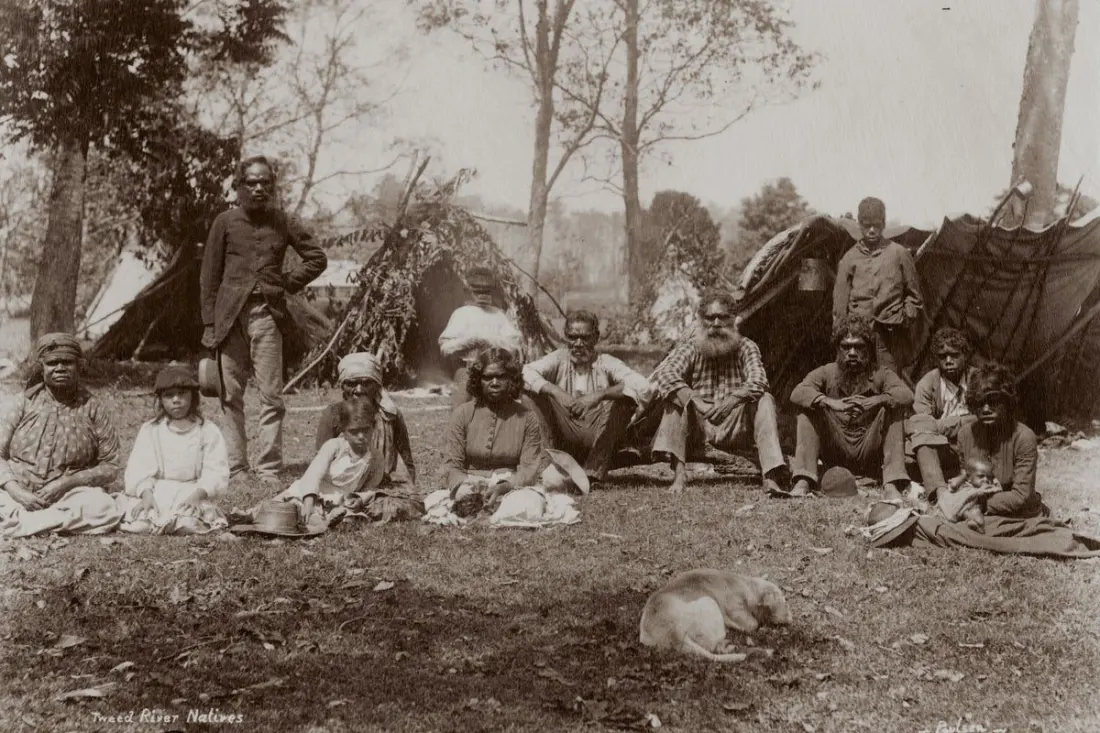
A new study from Flinders University has dramatically rewritten the size of Australia's Indigenous population before European colonisation — and the numbers are sobering. Published in Nature Human Behaviour, the research estimates that more than two million Aboriginal and Torres Strait Islander people lived on the continent when the First Fleet arrived in 1788. That's up to seven times higher than the long-cited figure of 250,000, which dates back to the 1930s.
The earlier estimates, the researchers argue, failed to account for the full impact of lethal introduced diseases and structural violence. Using computer modelling that draws on archaeological evidence, genetic reconstructions and cultural observations, the team calculated a pre-colonial density of 0.29 people per square kilometre. Within 80 years of colonisation, roughly 93 per cent of that population had been removed. By 1861, only about seven per cent had survived.
The story doesn't end there. The Indigenous population has grown steadily since the 1950s, and the 2021 census counted around 37 per cent of the estimated median pre-colonial figure — a recovery the study's authors describe as remarkable resilience. Co-author Larissa Behrendt said the findings reframe 1788 not as a marginal consequence of colonisation but as "a demographic catastrophe at the heart of the Australian story", while also highlighting survival as one of the most extraordinary chapters in Australian history.
For travellers, this is worth knowing before you go. Increasing numbers of visitors to Australia engage with the country's 65,000-year-old Indigenous heritage — through guided walks with Aboriginal rangers in Kakadu, rock art tours in the Kimberley, cultural experiences around Uluru, or harbour walks in Sydney on Gadigal Country. Understanding the true scale of the population that lived across the continent before 1788 gives those encounters far more context, and it sits at the centre of ongoing truth-telling and reconciliation efforts that many Indigenous tourism operators speak to directly.
It also matters practically. Requests from travellers to acknowledge Country, book Indigenous-owned tours and learn local histories have grown sharply, and destinations increasingly build these experiences into itineraries. Knowing the history — including its devastations — makes you a more respectful guest rather than a passive sightseer.
The study is also a good example of how science is reshaping what we thought we knew: by combining several lines of evidence rather than relying on colonial-era records, researchers produced a picture of pre-contact Australia that is bigger, denser and more complex than the textbooks allowed. As the authors put it, the goal is a heightened understanding of intergenerational trauma to inform future policy — and, for visitors, a more honest understanding of the places they are walking through.