Autumn is prime hiking season in Canada — cooler air, thinner crowds, spectacular colour. But it's also when bears enter hyperphagia, a feeding frenzy in which grizzlies and black bears pack away more than 20,000 calories a day to prepare for hibernation. That makes September and October an important time to know how to share the trail.
Bear guide Phillipp Tandler, who works at a floating lodge in British Columbia's Great Bear Rainforest, sums up his three core rules simply. First, never run — a fleeing hiker can trigger a chase instinct, like a dog spotting a squirrel. Second, control attractants: bears' noses are extraordinary, so pack out all garbage, store food and even toothpaste in bear hangs or hard-sided containers, and cook well away from your tent. Third, don't surprise a bear. Talk, call out or sing on trails in bear country so animals know you're coming and can move off. Skip the bear bells sold in outdoor shops — studies show bears simply ignore them; Parks Canada states flatly that they're not effective.
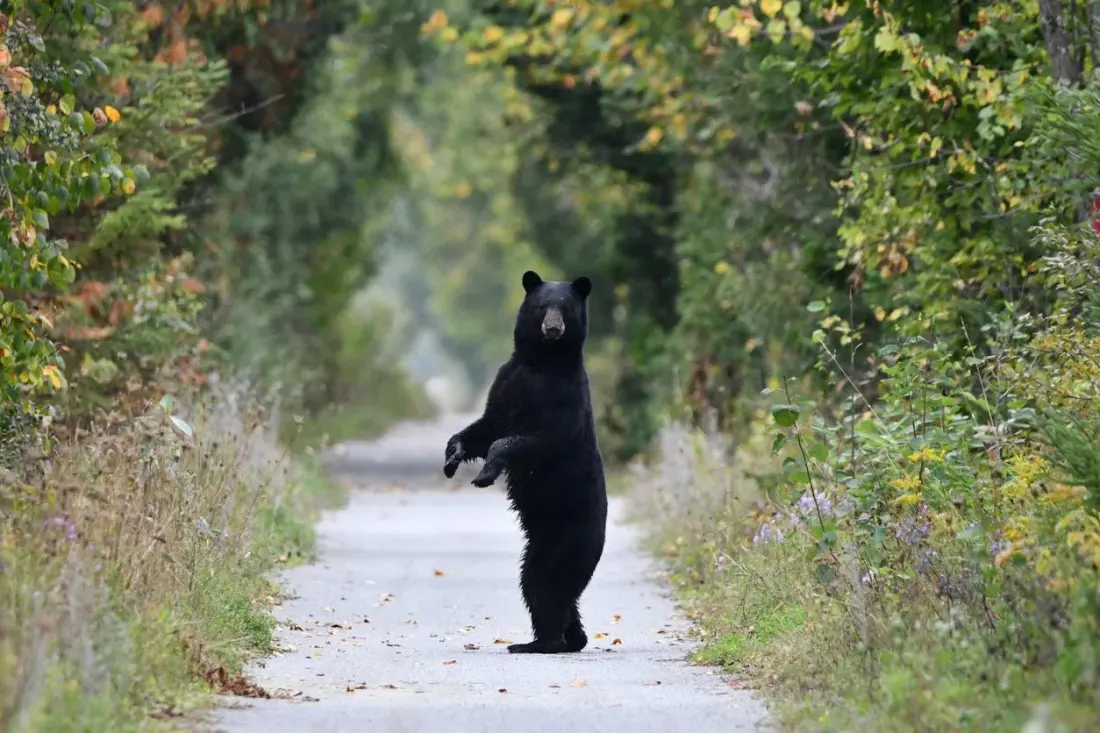
If you do meet a bear, the key is reading its behaviour. A defensive bear — usually startled, or a mother with cubs — appears stressed, may grunt or bark. In that case, speak calmly and firmly, don't threaten it, and back away slowly. A bear that follows, with head and ears up and intent on you, should be treated differently: raise your voice, make yourself big, stand your ground. Bear spray is the tool experts trust most — research shows it outperforms every other deterrent, including firearms. Carry it accessible in a holster, check the expiry date, and practise quick one-second bursts aimed at the face to create a spray wall between you and the animal.
If a defensive attack proceeds despite that, play dead: lie on your stomach, legs apart, hands clasped behind your neck until the bear leaves. In the rare event of a predatory attack that won't stop, fight back with anything you can. The reassuring context: serious encounters are exceptionally rare, and you're statistically far more likely to crash your car driving to the trailhead.
One reason to be extra alert this season: drought and wildfires across western North America have damaged berry crops, pushing hungrier bears to roam farther in search of food — conditions scientists link to rising human-bear conflict.
For anyone planning a fall hiking trip in the Rockies or BC's coast, the takeaway is simple: make noise, manage your food and smells, carry working bear spray and know how to use it. Most bears want nothing to do with people — your job is to let them keep it that way. — Explore Magazine Canada