Indonesia rarely gets the foodie credit it deserves. One travel writer admits he once ranked the country's cuisine at the bottom of Southeast Asia — until properly exploring it changed his mind entirely. His verdict now: Indonesian food is one of the most underrated cuisines on earth, provided you know what to order and where.
That makes sense once you consider the geography. Thousands of islands and hundreds of ethnic groups mean there's no single Indonesian cuisine. Sumatra serves rich, spicy Padang food; Java swings from the sweet dishes of Yogyakarta to savoury East Javanese cooking; Bali has its own Hindu-influenced style; Sulawesi goes fiery with Minahasan food. Chinese, Indian, Arab and Dutch influences layer on top.
The standout dishes: nasi Padang tops the list — not one dish but a table-filling experience where servers bring dozens of little plates of Minangkabau curries, rendang, fried chicken and sambal, and you pay only for what you eat. Rendang itself, the slowly reduced coconut-and-spice beef from the Minangkabau people, is best in Padang, its homeland. In Yogyakarta, gudeg (young jackfruit braised with coconut milk and palm sugar) is a city institution, especially around Wijilan. East Java's rawon is a strikingly black beef soup coloured by keluak nuts, best in Surabaya. And soto ayam — turmeric-scented chicken soup with noodles or rice — works as breakfast, lunch or dinner anywhere in the country.
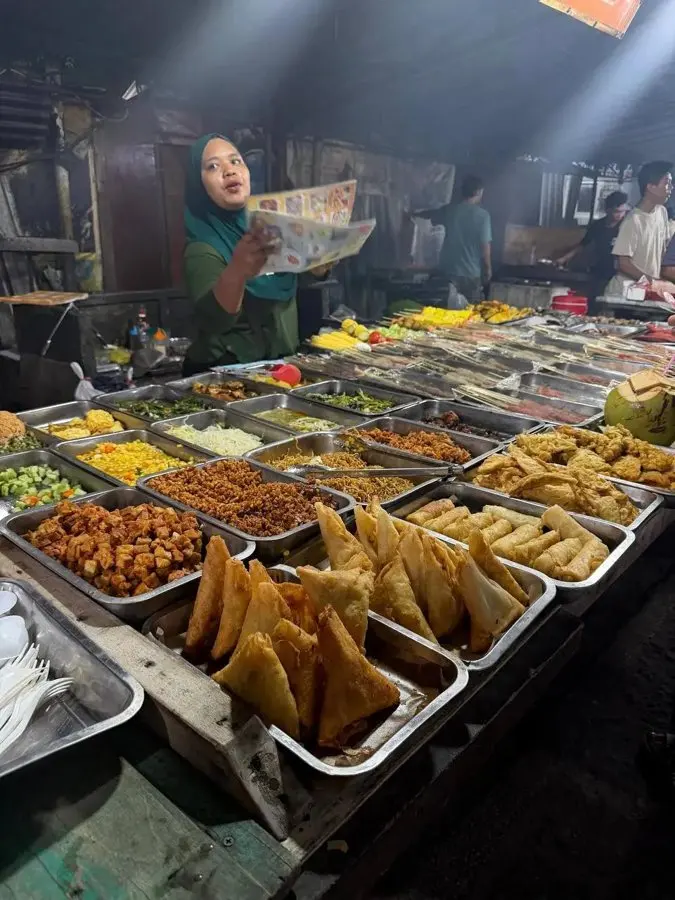
Street food is where Indonesia really flexes. Bakso (meatball soup) is sold from mobile carts that announce themselves by clattering a spoon on a bowl; Malang is famous for it. Martabak comes in two personalities: a crispy stuffed savoury pancake or a thick sweet one loaded with chocolate, cheese and condensed milk — Jakarta's evening vendors draw queues for both. Sate over charcoal is nationwide, with Madura celebrated for chicken sate and Padang serving a thick spicy-sauce version. Mie goreng and nasi goreng round things out as the reliable late-night staples.
On the drinks side, Bintang lager remains the go-to beer nationwide, with Bali Hai as an alternative and Bali's potent arak spirit for the brave. Tuak, a palm wine among the Batak people of North Sumatra, and sweet-sour Balinese rice wine brem take more tracking down. Non-drinkers get the better end of the deal: es cendol (palm-sugar jelly strands in coconut milk), strong unfiltered kopi tubruk, es teler fruit cocktail, thick avocado juice, and the gloriously odd durian shake topped with cheddar cheese — salty-sweet and, reportedly, much better than it sounds. Desserts run from klepon, rice-flour balls that burst with liquid palm sugar, to lapis legit, a Dutch-influenced layered spice cake.
For travellers, this is a practical eating map: pair Yogyakarta with gudeg, Surabaya with rawon, Padang with everything spicy, and Bali with arak and shakes. Come hungry and skip the hotel buffet — the street is where Indonesia eats.