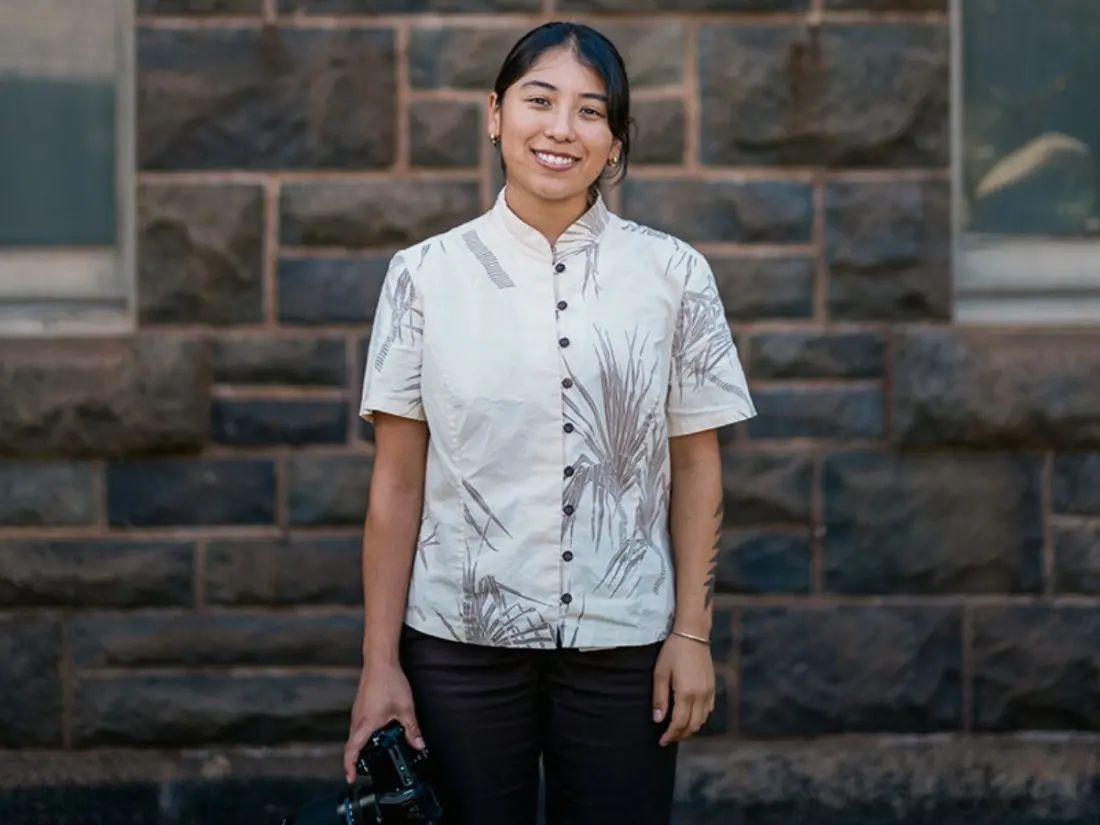
In a hallway at Honolulu's Bishop Museum, a pop-up studio might appear at any moment. That is where Noel Kenny works. As the museum's collections photographer and asset manager, she spends at least two days a week hauling camera gear, tethering cords and portable backdrops between collection spaces, photographing everything from archival photographs dating to the 1800s to canoes stretching 20 feet long.
Kenny's route to the job was anything but linear. She studied advertising and design at the University of San Francisco, then worked in advertising in the city after graduating. Homesickness pulled her back to the Islands in 2021, and she now helps digitise the museum's holdings so they can be viewed by people anywhere in the world.
The variety of subjects means no two days look alike. Kenny builds temporary studios wherever there is room, and creativity is a job requirement when the object in front of you could be a fragile specimen or an oversized watercraft. She consults each department before a single frame is shot, learning what the photos will be used for so she can adjust equipment and lighting to highlight the right details. Lighting, she says, is what brings out texture and fine detail, and the approach shifts depending on the material.
There is also a cultural dimension to the work. Kenny and her colleagues discuss how objects should be positioned, even what counts as the 'front' of an artifact, to make sure each item is represented respectfully and stands correctly. The photographs serve two purposes at once: archival documentation and a resource for the community.
For travellers, this is a reminder of what sits behind the exhibits at Bishop Museum in Honolulu's Kalihi district. The museum holds one of the largest collections of Hawaiian and Pacific cultural artifacts and natural history specimens anywhere, and the digitisation effort Kenny leads means much of it is becoming accessible online, not just to researchers but to anyone curious about Hawai'i's history. Her hope, she says, is that the images will help people in Hawai'i and beyond connect more deeply with their culture and reach knowledge that was previously out of reach.
If you are planning a visit, the museum's Hawaiian Hall and the science-focused Richard T. Mamiya Science Adventure Center are the headline attractions, and rotating exhibitions regularly draw on the very collections Kenny photographs. Knowing that teams are quietly working to document and preserve these objects adds a layer to a visit: what you see on display is only a fraction of what the institution safeguards.
The story, published in Hawai'i Magazine's 2026 Summer digital issue, is a nice look at the people behind preservation work that most visitors never notice.