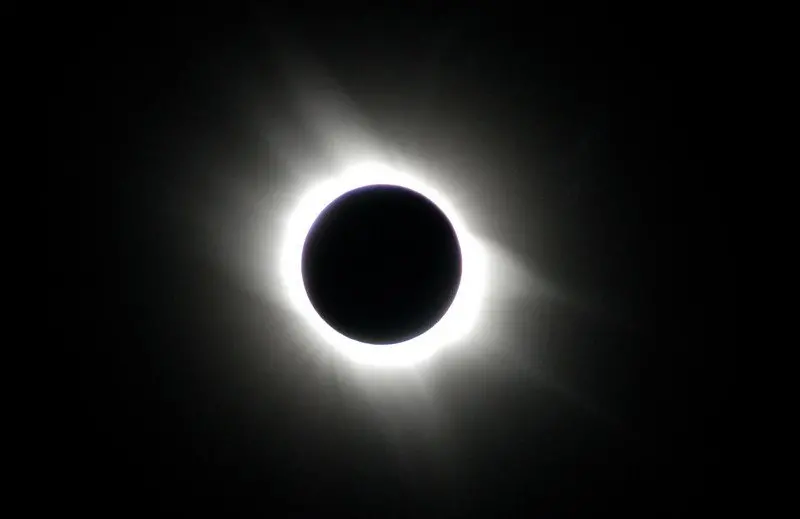
Egypt is now taking bookings for one of the biggest astronomical events of the decade: a total solar eclipse on 2 August 2027, with totality lasting more than six minutes in the south of the country. The National Research Institute of Astronomy and Geophysics (NRIAG) has opened registration for organised observation programmes in Luxor and Qena, aimed squarely at international visitors, researchers and astronomy fans.
The viewing packages are more affordable than many eclipse-chasing trips tend to be. At Luxor Library, prices start at USD 500 per person, though accommodation is not included. Qena University offers two tiers: USD 1,000 per person with one night's stay, or USD 2,000 for a two-night package. Registration stays open until 30 June 2027, subject to availability.
A few practical details are worth flagging. Transport is not covered, and neither are the costs of importing observation equipment — but NRIAG will issue official paperwork to help visitors clear customs with telescopes and cameras. The institute has mapped seven potential viewing sites across Egypt; for now, Luxor and Qena are bookable, with Nag Hammadi expected to join later.
The numbers explain the hype. Totality is forecast to run roughly six minutes and 22 seconds at Luxor Library and six minutes and eight seconds at Qena University — far longer than most total eclipses deliver. The 2027 event's path also crosses some of the world's most storied ancient sites, which is precisely why Egypt is pairing the science with tourism.
There's an academic layer too. NRIAG is hosting an international conference on solar physics and space weather from 3–5 August 2027, covering the solar corona, solar wind, magnetic activity and space-weather forecasting. Part of it unfolds aboard the Queen of Sheba Nile cruise, sailing between Luxor and Aswan from 2 to 6 August — a rare combination of eclipse viewing and a classic Nile itinerary.
For travellers, this is a genuine bucket-list window. Six-plus minutes of totality happens rarely; many eclipses offer barely two. Luxor adds Karnak, the Valley of the Kings and sunset on the Nile to the package, so even a short trip carries plenty beyond the sky show. Expect demand from specialist astronomy tour groups, so booking early — and confirming accommodation independently if you choose the Luxor Library option — makes sense.