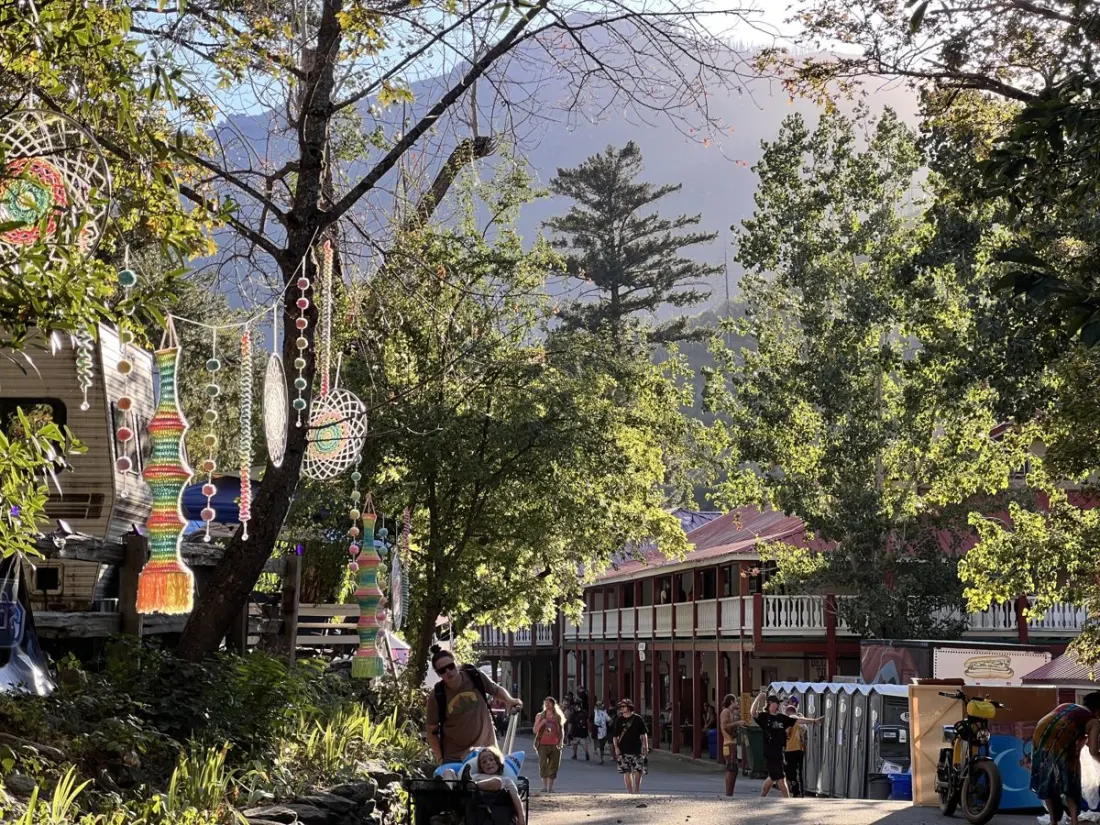
For decades, hikers walking the Pacific Crest Trail have emerged from the Feather River canyon to find cold drinks, hot meals and a bunk waiting at Belden, a four-acre riverside hamlet in Northern California. Now the whole place — lodge, general store, restaurant and all — is on the market for $4.75 million.
Belden isn't a town in the administrative sense. It's an unincorporated, off-grid settlement with roughly 15 permanent residents, rebuilt from a Gold Rush-era mining camp. Ivan Coffman, now 87, arrived in 1970 hunting for gold and bought the property at a foreclosure sale in 1989, by which point most of the original buildings had burned in a wildfire. He turned it into a working resort and event venue, hosting music festivals, wellness retreats and camping gatherings alongside the steady stream of through-hikers.
The sale comes after a painful couple of years. Belden barely survived the 2021 Dixie Fire — one of California's largest on record — only because Coffman's son and several employees stayed behind to defend the buildings. Coffman had hoped to hand the town to his son, who died this year, prompting the decision to sell. It follows a similar listing at Campo near the Mexican border, the PCT's southern terminus, which has been asking $6 million for several years. Buyers with deep pockets could, in theory, own both ends of a legendary trail.
Belden's reputation among hikers is well earned. It's a key resupply and rest stop in a rugged stretch of Northern California, with showers, food and riverside camping drawing hundreds of reviews on the FarOut app. Cheryl Strayed even mentions stopping there during her 1995 section hike, as recounted in her memoir Wild — a connection that has only added to the town's cachet among long-distance walkers.
Why does this matter if you're not shopping for real estate? Because a sale puts the future of a beloved trail institution in question. Towns like Belden survive on a knife-edge of thin margins, remote locations and devoted owners. Whoever buys it next will shape whether through-hikers in coming years still find a hot meal and a cold beer in the middle of the Feather River canyon — or just a locked gate. For now, the property is being pitched as a boutique hospitality, festival or glamping opportunity, which at least suggests the hiker tradition could continue.