A diary from New Zealand's Te Araroa trail, covering days 17 to 19 between Whananaki and Ruakaka, shows what thru-hiking in Northland actually looks like: short hikes squeezed between long road walks, hitches to skip dull tarmac, and the odd moment that makes the whole thing worthwhile.
Day 17 started at Whananaki with the much-hyped "longest footbridge in the southern hemisphere" — which the writer found less than overwhelming — before a dirt-road and coastal-path day ending near Ngunguru. A lucky hitch got the group back on track, with time for coffee, cake and a supermarket resupply before the night's real highlight.
That was James, a trail host at Nikau Bay who has earned near-legendary status among Te Araroa hikers. He runs campsites and small cabins, gives nightly briefings on the next 60km of trail, and ferries guests across the bay by boat. The choice is ride or swim — and the writer swam, bag handed over first, calling it one of the trip's best moments. A hot shower sealed the deal.
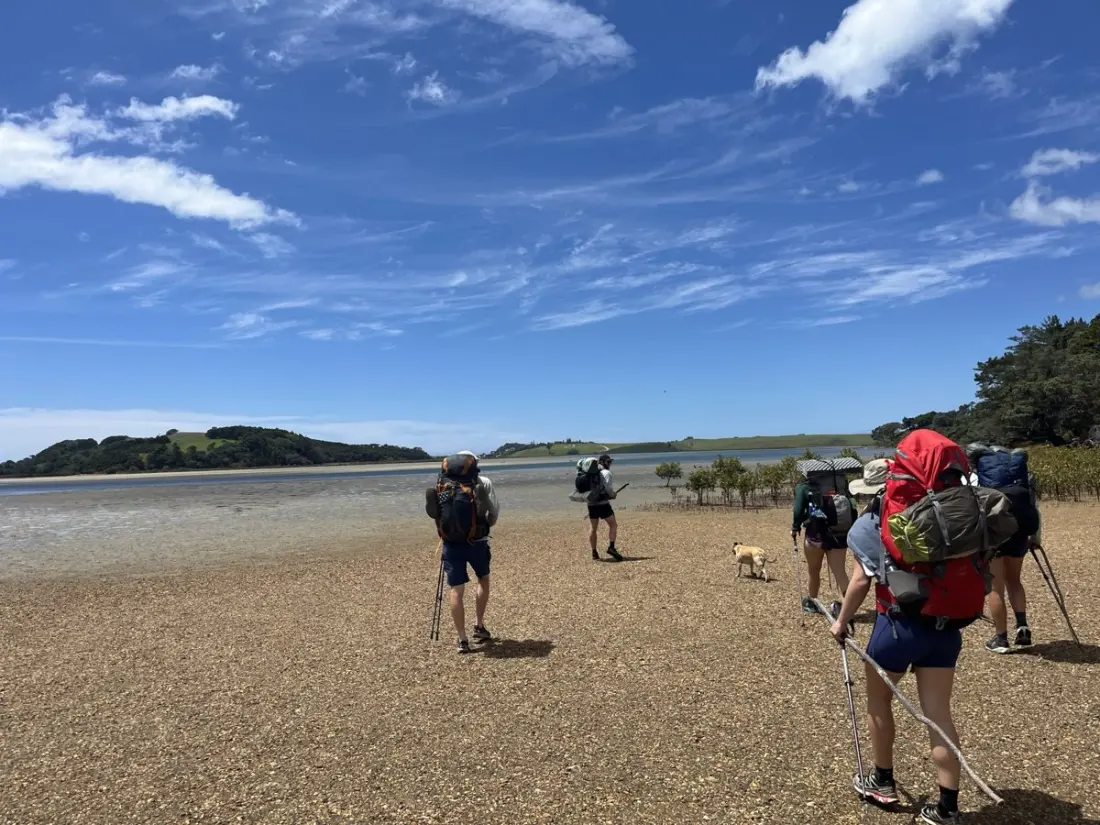
The group then engineered two big days to buy themselves a zero (rest day) in Ruakaka, timed to a birthday. Day 18 was 32km despite skipping 15km of road by hitching, including a tidal crossing that had to be timed right — they waded through mangroves with water only thigh-high, escorted partway by a friendly dog. The afternoon climb over Kauri Mountain in full sun nearly broke them before a cold swim and a final 7km beach walk to camp at kilometre 393.
Day 19 brought mist and rain over Bream Head, which they speed-walked in four hours instead of the expected five or six. A water taxi from Reotahi Bay to Marsden Point promised possible orca sightings; none appeared. The payoff: an Airbnb in Ruakaka with beer, towels, snacks and endless laundry.
For anyone eyeing Te Araroa, this stretch is a good reality check. Northland mixes genuinely lovely coastal walking with stretches of road where hitching is the pragmatic local custom, and the trail community — hosts like James, random drivers, dogs — is half the experience. Long-distance hikers will recognise the rhythm: plan around tides, resupply at dairies, celebrate the zeros.