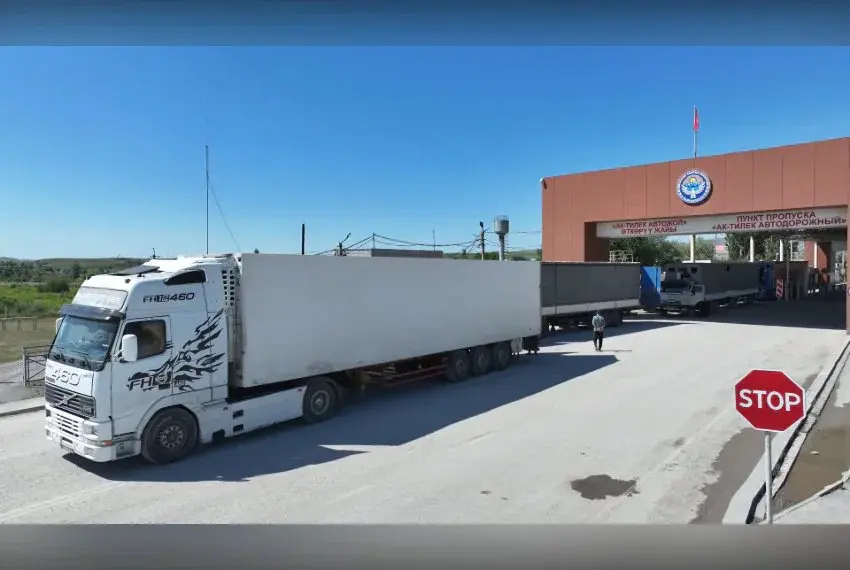
Kyrgyzstan's Ministry of Transport and Communications has sent inspectors to two of the country's checkpoints, Ak-Tilek and Malodovodnoye, in a bid to clean up what happens on the ground there. The review, confirmed by the ministry's press service, focused squarely on corruption: illegal payments, abuse of authority by staff, and other forms of extraction that officials want stamped out.
The inspection wasn't just about bribery. Officials also checked the technical condition of equipment at the crossings, how the weight and dimension control systems are operating, whether freight vehicles are sticking to the established limits, and how inspection procedures are actually being carried out. Staff have now been told to end any illegal collection of payments, stop abusing their positions, and take greater personal accountability for what happens at their posts.
One of the more interesting signals from the ministry is its intention to minimise the human factor in inspection procedures altogether. In other words, the more that can be automated or systemised — weight sensors, dimension checks, documented procedures — the fewer opportunities there are for a cash handover in a back office. That matters because overloaded trucks do real damage to roads, and the ministry framed the whole exercise as a way of protecting infrastructure and keeping traffic safe.
For travellers, the context is worth knowing. Ak-Tilek sits on the border with Uzbekistan near Osh, one of the main land crossings in a country that has become a favourite on the Central Asia overland circuit. Anyone doing the classic Kyrgyzstan–Uzbekistan loop — Bishkek, Osh, the Fergana Valley, Samarkand — is likely to pass through a crossing like this, and checkpoint friction is one of the more common complaints on the route. A transport ministry publicly investigating illegal payments and promising tighter oversight is exactly the kind of thing that can slowly make border days less stressful, even if the immediate story is mostly about freight and trucking compliance.
If you're planning to cross into or out of Kyrgyzstan by land, keep an eye on official updates before you travel, as checkpoint procedures and opening arrangements in the region can change. Have your documents ready, expect queues during peak summer months, and know that if someone at a checkpoint asks for an unofficial payment, it's not a legitimate fee — a story like this one shows the government itself is saying as much. For overland travellers, and for the drivers who keep goods moving across the border, cleaner, more automated inspections should mean faster, more predictable crossings on one of Central Asia's busiest routes.