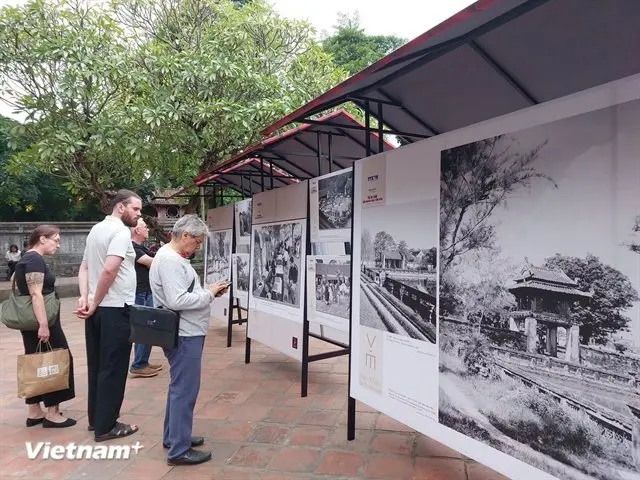
Hanoi's Temple of Literature complex just hosted one of its most symbolic celebrations in years: an artistic performance honouring 950 years since the founding of the Quốc Tử Giám, Vietnam's first national university, established in 1076. The event ran as part of an anniversary week from November 8 to 15, organised by the Văn Miếu - Quốc Tử Giám Centre for Cultural and Scientific Activities.
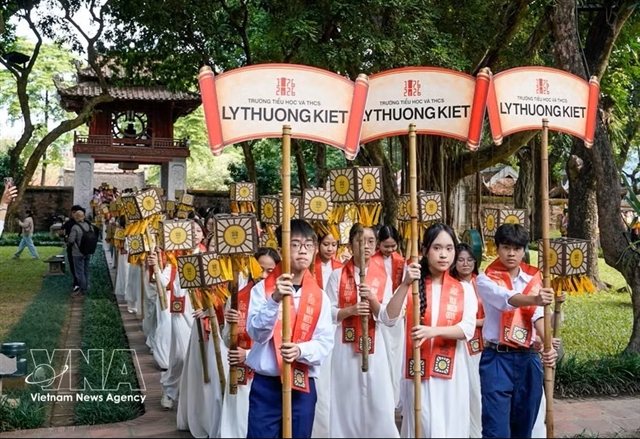
The centrepiece, staged on November 11 under the theme 'Ánh Sao Khuê Minh Triết' (the Sao Khuê Light of Wisdom), put 950 Hanoi high school students at the heart of the show — one for each year. Performances traced the arc of Vietnamese scholarship, from the era of brutal imperial examinations to the classroom culture of today, weaving in imagery of the university's historical students alongside professional artists.
The most striking moment came at the Doctoral Steles and the Pavilion of the Constellation of Literature, where two students — a boy and a girl chosen to represent the current generation — recited an oath pledging to follow their scholarly predecessors, pursue academic excellence and serve their country. The steles themselves are a highlight for any visitor: stone slabs mounted on turtle backs, inscribed with the names of those who passed the toughest exams of the imperial era.
Organisers framed the event as more than a birthday party for an old institution. The message was that Vietnam's respect for learning is a living tradition — one that still prizes teachers, moral character and knowledge as the foundation of national development — and that Hanoi's heritage sites should keep feeding into contemporary life rather than sitting behind ticket barriers.
For travellers, this is a useful nudge. The Temple of Literature (Văn Miếu - Quốc Tử Giám) is one of Hanoi's most rewarding sights, and it's far more than a pretty courtyard. Founded the same year as the university, it's the country's oldest seat of learning, with five sequenced courtyards, the Khue Van pavilion that appears on the 100,000 dong note, and those famous steles recording graduates from the 15th to 18th centuries. Visiting during a cultural anniversary like this one means a chance to see the site used the way it was intended — as a stage for scholarship, ceremony and student life, not just a photo stop.
If you're planning a Hanoi trip in late 2026 or 2027, keep an eye out for remaining anniversary events and exhibitions at the complex; milestone years tend to bring extra programming, restored exhibits and better-contextualised displays. Even on an ordinary day, going early in the morning lets you appreciate the quiet of the courtyards before tour groups arrive — and pairs neatly with nearby stops like the Imperial Citadel of Thăng Long or a bowl of bún chả on the old streets beyond.