Bali's temples and palaces can fill a week on their own — and some of the island's most rewarding architecture sits well away from the southern surf crowds. A fresh roundup of the island's built highlights runs from clifftop sea temples to a Buddhist monastery with a miniature Borobudur.
The classics earn their reputations. Uluwatu Temple perches on a limestone cliff roughly 70 metres above the Indian Ocean, its courtyards strung along the cliff edge; come late afternoon, stay for the Kecak fire dance at sunset — and mind the thieving monkeys. Tanah Lot, on its tidal rock offshore, is at its best well before the sunset rush, since access to the rock depends on the tide. In the cooler central highlands, Ulun Danu Beratan appears to float on Lake Beratan, its tiered meru shrines dedicated to the goddess of water — go early for mist on the lake.
East Bali stacks up its own cluster. Lempuyang's famous split gate, the so-called Gates of Heaven, frames Mount Agung in that instantly recognisable shot, but the sacred complex climbs the mountain beyond it; arrive early for clear views and quieter paths. Nearby, Besakih — the Mother Temple — spreads across Agung's slopes as a whole network of courtyards, stairways and shrines; budget several hours and consider a local guide.
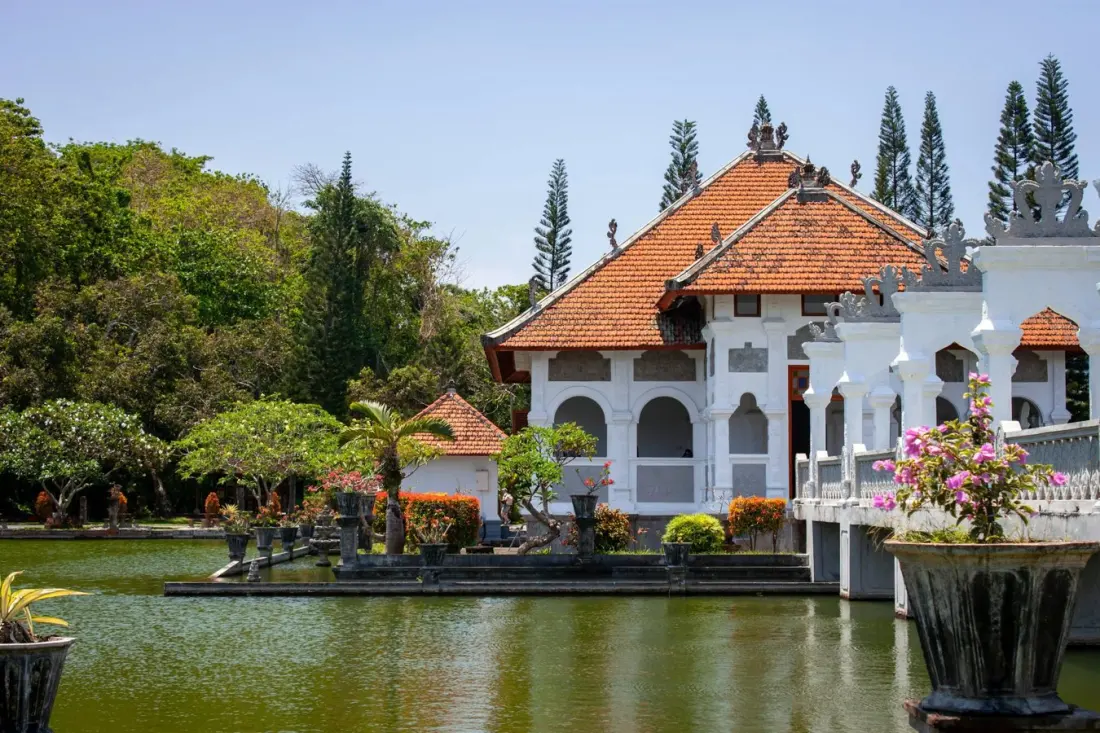
Royal heritage takes water as its theme. Tirta Gangga, built by the Karangasem royal family, layers ponds, fountains and stepping stones across fish-filled pools, while the less-crowded Taman Ujung nearby blends Balinese, European and Chinese design in pavilions and reflecting pools — the two make an easy day trip together. In Mengwi, Taman Ayun, the former royal temple whose name means 'beautiful garden', sits behind a broad moat and forms part of Bali's UNESCO-listed cultural landscape.
For something different, head north to Brahmavihara-Arama, Bali's largest Buddhist monastery, opened in 1971 above Banjar. Its terraced gardens culminate in a 1999 miniature replica of Java's Borobudur. And architecture in Bali isn't only monumental: Penglipuran village shows traditional design at street level, with orderly compounds, stone walls and an adjacent bamboo forest — remember it's a living neighbourhood, not a museum. For a modern counterpoint, the giant Garuda Wisnu Kencana statue on the Bukit Peninsula looms over a cultural park of performances and open spaces.
The takeaway: if temples and palaces appeal, base yourself to sample a couple of clusters — east Bali for Lempuyang and the water palaces, the highlands for Ulun Danu Beratan — rather than dashing between them from a southern beach base.