Bhutan's Ministry of Infrastructure and Transport has put forward a Nu 480 million plan to fix the basics in 17 small urban centres across seven districts — Gasa, Zhemgang, Dagana, Lhuentse, Trashi Yangtse, Tsirang and Haa. These are exactly the out-of-the-way places most visitors only pass through on treks or road trips, and the upgrades could quietly change what they're like to visit.
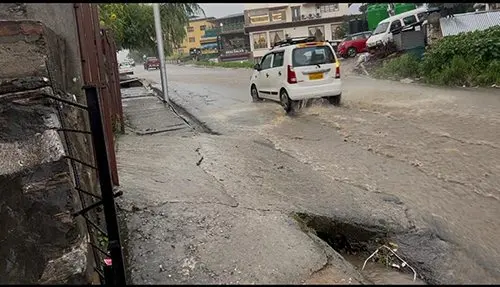
The project, drawn up by the Department of Infrastructure Development and the Department of Human Settlement, runs from July 2026 to June 2029, with actual works scheduled between January 2027 and June 2028. It targets the everyday infrastructure these towns lack: road networks, footpaths, drainage, water supply, sewerage, public lighting, utility ducts and green spaces. Total coverage is modest — around 20,215 people across 17 square kilometres — but the money is spread deliberately, with budgets split 70 percent by population and 30 percent by area.
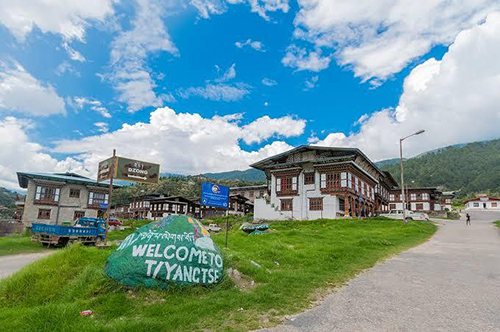
Dagana gets the biggest slice at Nu 87.65 million, followed by Trashi Yangtse (Nu 86.36 million) and Zhemgang (Nu 79.74 million). Gasa, Bhutan's least populated district, receives Nu 31.62 million, earmarked entirely for the first fiscal year, with plans focused on greenery, open spaces and play areas. Elsewhere the plans have a distinctly local flavour: Lhuentse will get a widened main road plus a pedestrian and bicycle trail; Haa's streams will be cleaned, de-silted and lined with walkways and green buffers; and in Trashi Yangtse, development is flagged to proceed carefully around the habitat of the black-necked crane, the bird that winters in the region's valleys.
The ministry frames this as correcting a long-running imbalance. Under the Comprehensive National Development Plan 2030 and the 13th Five-Year Plan, these towns are designated regional service and economic centres, yet growth in population, business and tourism has outpaced basic services. Previous structure plans exist on paper; the issue is execution, and this project is meant to finally fund the shovel-ready parts.
For travellers, the relevance is practical. Many of these dzongkhags — Lhuentse and Trashi Yangtse in the far east, Gasa in the north with its famous hot springs, Haa in the west's quieter valley — see tourism growing but remain hard to reach, with thin facilities for walking, resting and staying. Better footpaths, drainage, lighting and public spaces between 2027 and 2028 should make stops in places like Damphu, Tingtibi or Dagapela more comfortable, especially for cyclists and road-trippers exploring beyond Thimphu and Paro.
The lead implementing agency is the Department of Infrastructure Development, with regional offices helping prioritise works during the detailed project report stage, and the Department of Human Settlement reviewing designs. Consultations with communities are planned before activities are finalised, so the final list of works may shift. The split is Nu 275.65 million in fiscal 2026–27 and Nu 204.35 million the following year, subject to resources being mobilised. If it lands on schedule, the window from early 2027 will be the time to watch — and perhaps the moment to plan that east-meets-west Bhutan road trip through districts few visitors tick off.