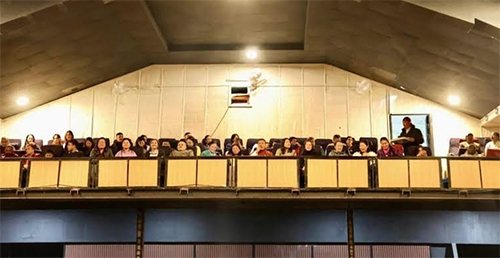
Something unexpected is happening in Thimphu's movie theatres: business is thriving. City Cinema's manager Tek Nath Adhikari reports that both screenings and attendance have climbed in recent years, fuelled by better Bhutanese storytelling, sharper production values and a new generation eager to watch films on the big screen.
The numbers tell the story. A moderately successful film pulls roughly 150 viewers a day across a 30-day run; a hit can manage about 265 daily. Real blockbusters run much longer — "Dobchu" stayed in cinemas for over 99 days, while "Perfect Girl 2" and "Khekpa" each held audiences for around two months.
The audience itself is shifting. Generation Z and Millennials are showing up in greater numbers, monks remain loyal regulars, and — notably for travellers — visitors are increasingly keen to catch a Bhutanese film in a local hall. For anyone wanting to understand the country beyond monasteries and mountain passes, an evening at the cinema offers a direct line into contemporary Bhutanese culture and humour.
There's a catch, though. Filmmaking has outgrown the buildings. Adhikari argues that the government and regulators like the Bhutan InfoComm and Media Authority should fund theatre upgrades alongside support for producers, warning that dated, uncomfortable halls could push viewers back to streaming at home. He frames it with a local analogy: films are like people, theatres like temples — one can't flourish without the other. He ties shared cinema-going to Bhutan's national ethos of Gross National Happiness.
Practicality is improving too. City Cinema is launching its own online booking app, scheduled to go live on 26 October 2026, starting with films from MNG and other upcoming releases — a small thing that should make spontaneous movie nights much easier for visitors who'd otherwise face queues and language barriers.
Not everyone is convinced. One young moviegoer interviewed in the report had last visited a cinema five months earlier, citing the combined cost of tickets, transport and snacks as a deterrent. Still, they conceded that theatre sound and screen scale "elevate the emotional resonance" in a way home viewing can't match. Producer Dorji Wangchuck of Dorjis Production backs the broader trend, noting clear audience growth since COVID alongside bigger budgets and stronger technical work.
For travellers, the takeaway is simple: if you're in Thimphu and want a genuinely local evening, check what's playing at City Cinema. Bhutanese films rarely travel abroad, so this is a chance to see the industry at its most alive — surrounded by monks, students and families sharing the experience. Just don't expect luxury seating just yet; the buildings, as Adhikari admits, are lagging behind the films.