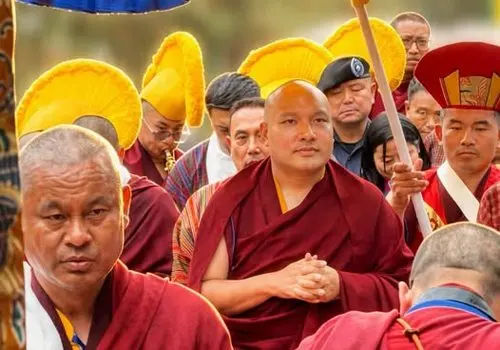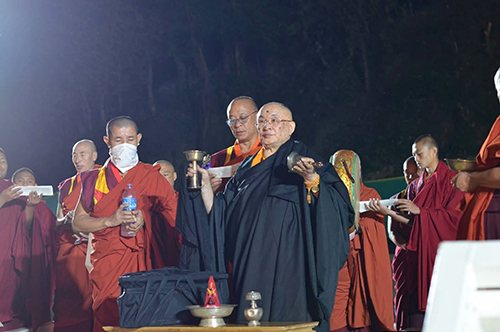
At Gelephu, in southern Bhutan, a major spiritual milestone has just taken place. His Holiness the Je Khenpo, the country's chief abbot, led senior clergy in performing the Sri-Non (Si-Nyon) ritual — a ceremony meant to suppress negative forces — at the exact spots where 108 Jangchub Chortens are to be built.
The distribution of duties says a lot about the scale of the undertaking. The Je Khenpo personally conducted the rites for chortens one to three, while the Dorji Lopen, his senior-most deputy, handled number 108. In between, the Lop Lhengay, Drubpoens and Lam Naytens of the Rabdey Dratshangs — the monastic bodies at the central and regional level — covered the rest, each site blessed to clear away obstacles to the project.
Chortens, known elsewhere as stupas, are dome-shaped monuments that hold deep symbolic weight in Himalayan Buddhism, and rows of 108 of them are a classic sight across Bhutan. Pilgrims traditionally circle them clockwise, spinning prayer wheels and reciting mantras, so once complete the Gelephu chortens will be as much a place of active worship as a landmark.
Gelephu matters beyond its border town status. It is the site of Bhutan's ambitious 'Mindfulness City' — a planned development championed by the King to create a mindful economic zone in the country's south, blending economic growth with Bhutan's Gross National Happiness philosophy. Laying down 108 chortens there signals the spiritual identity the project wants to carry, right alongside the new airport, infrastructure and investment plans.
For travellers, this is a heads-up on a place that will look very different within a few years. Gelephu today is a low-key gateway town on the Indian border, far quieter than Thimphu or Paro, and it offers a rare chance to see Bhutanese spiritual life up close before the crowds and construction arrive. Watching consecration rituals like this — or simply seeing senior monks at work — is the kind of experience that usually requires being in the right place at the right time.
Bhutan itself is unlike anywhere else on the map. Visitors pay a Sustainable Development Fee, tourism is deliberately managed, and the country famously measures progress in happiness rather than GDP. A stop in Gelephu, combined with the road route through the foothills, gives a Southern Bhutan angle most itineraries skip — and if the chortens are finished on your visit, you'll be among the first travellers to walk the full circle of 108.