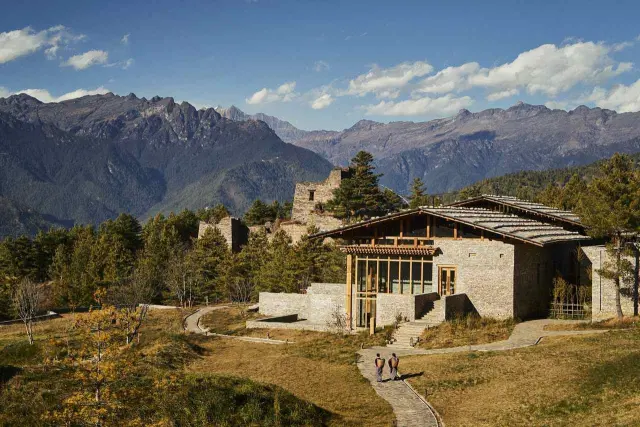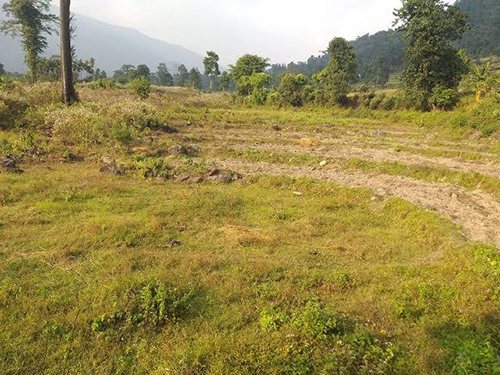
Drive towards Tashichholing in Bhutan's south-western foothills and the view tells an uncomfortable story. Terraces that once grew rice now sit fallow, and villages along the way buy much of their food — rice, flour, cooking oil — from markets across the Indian border ahead of the Dashain festival.
A field report in The Bhutanese by Gedu College student Dhanapati Sharma captures three roadside conversations that explain why. In one village, families say they gave up paddy because farm labour has vanished; their steep terraces resist mechanisation, so they still plough with oxen. A second group still grows food and a cash crop of arecanut (doma), but complains that middlemen take most of the profit, so growing more doesn't mean earning more. In Tashichholing itself, the villain is wildlife: a single night of elephants can flatten an entire paddy harvest. One farmer's observation is striking — if more households cultivated their fields, losses would be shared and everyone might save at least part of a crop.
The national numbers back up the anecdotes. Paddy production dropped from about 54,088 metric tonnes in 2020 to 40,804 tonnes in 2023, and the country's first Food Balance Sheet Report shows planted area shrinking from roughly 42,000 hectares in 2021 to about 37,000 hectares in 2024 — a 13 per cent decline.
There is an economic case for turning this around, not just a cultural one. A 2026 World Bank update estimates the agrifood system supports around 55 per cent of all jobs in Bhutan, and 71 per cent of rural ones. Moving workers into food processing, logistics and food services could lift earnings by up to 33 per cent. The report's suggested fixes are practical: shared machinery for small terraced plots, repaired irrigation channels, stronger cooperatives with transparent pricing, local processing of crops like arecanut, community fencing and coordinated responses to elephant movements.
For travellers, this matters more than it might first appear. The terraced valleys and working villages of southern and western Bhutan are a big part of what makes the country feel distinct from anywhere else, and rural depopulation slowly changes that. Visitors who trek between villages, stay in farmhouses or simply drive the long roads between towns are seeing this transition firsthand — and community-based tourism is one of the few income streams that can put money directly into villages losing their farm earnings. If rural Bhutan hollows out, the country loses both its food security and part of its charm.
The author's conclusion is a fair summary: the question isn't why farmers leave their fields behind, but what would make the fields worth returning to. Better pay, protection from wildlife and machinery suited to steep land would be a start — for the villages, and for everyone who comes to see them.
Story as reported by The Bhutanese.