Fifty-nine seconds of shaky 16mm film shot in a Northern California forest in 1967 has kept the Bigfoot myth alive for nearly six decades. Now a new documentary, Capturing Bigfoot, directed by Marq Evans, claims to close the case for good — and it has receipts.
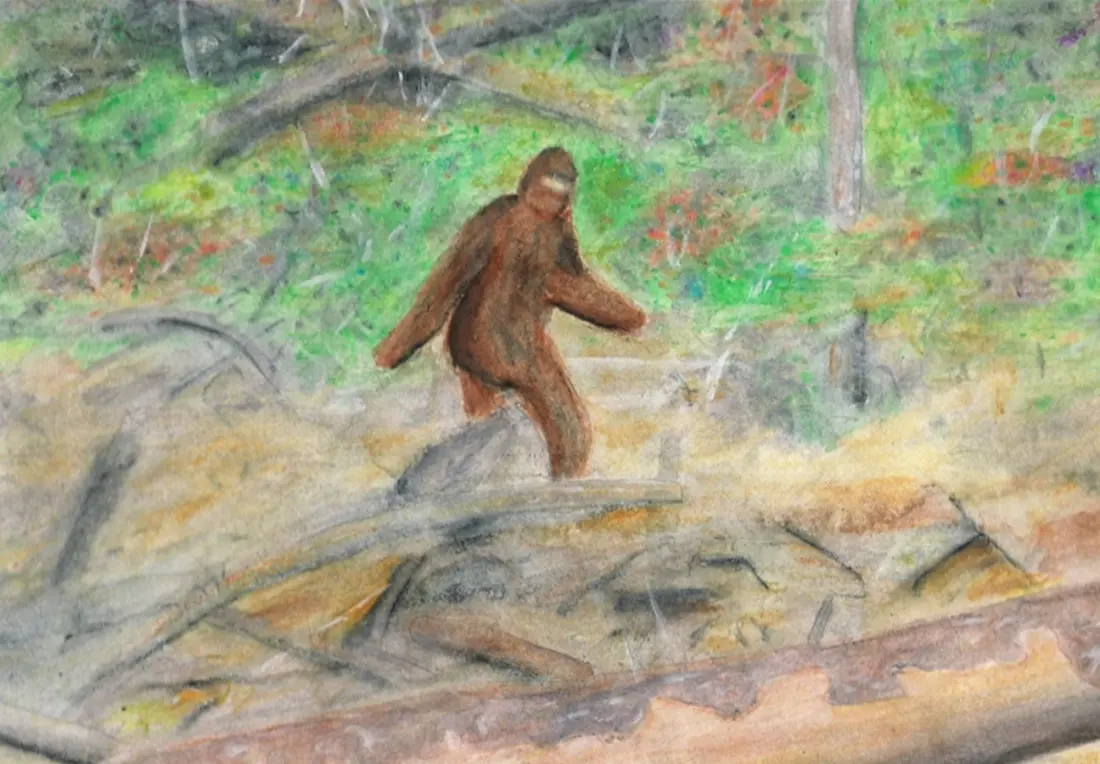
The original clip was filmed on 20 October 1967 by Roger Patterson, a rodeo rider from Yakima, Washington, in what's now Six Rivers National Forest. It shows a hairy, ape-like figure striding past trees before glancing back at the camera. It went globally viral long before the internet existed, becoming the second most-watched piece of vérité footage in history after the Zapruder film.
The documentary's key find is a lost 16mm reel from 1966, a full year before Patterson's Bluff Creek shoot, that allegedly shows a dress rehearsal: an early prototype fur suit being tested in a forest clearing. The film also introduces Bob Hieronymus, a Yakima local who says he wore the suit — reportedly stitched together from secondhand fur coats found in Patterson's locked shed — and demonstrates the creature's signature loping gait.
Evans sketches Patterson as a sharp operator who understood tabloid culture. His roadshow toured cinemas and arenas charging $2 a ticket, and during a two-week run at Salt Lake City's Salt Palace it reportedly out-earned a Simon & Garfunkel concert. The money, though, mostly went to Patterson's brother-in-law, Al DeAtly, who used it to bail out his construction business and build himself a mansion, while Patterson's filming partner Bob Gimlin got almost nothing and spent decades working Bigfoot conventions. The film's emotional core is Patterson's son Clint, now in his late 60s, who defended his father's legacy for most of his life before confronting the evidence.
Not everyone is convinced. Idaho State University anatomy professor Jeff Meldrum and former Universal Studios makeup artist Bill Munns have long argued that the creature's muscle movement and fur couldn't be faked with 1960s Hollywood tools. But the documentary counters with simple ecology: a breeding population of 800-pound primates would need hundreds of individuals, and decades of logging, satellite imagery, trail cameras and environmental DNA testing have produced no bones, fossils or any biological trace whatsoever. The film places the Patterson footage alongside the 1934 Loch Ness photo and 1978 crop circles as evidence of our appetite for comforting fictions.
For travellers, the story is a reminder that the famous film location — the Bluff Creek area in the remote Six River country of far Northern California — is very real, and very worth exploring on its own merits. The region offers redwood-adjacent hiking, wild rivers and small towns that have leaned into their Bigfoot heritage with museums, roadside statues and festivals. Cryptozoology fans can still walk the forest where the legend was born; they'll just be sharing it with history rather than an undiscovered giant ape.