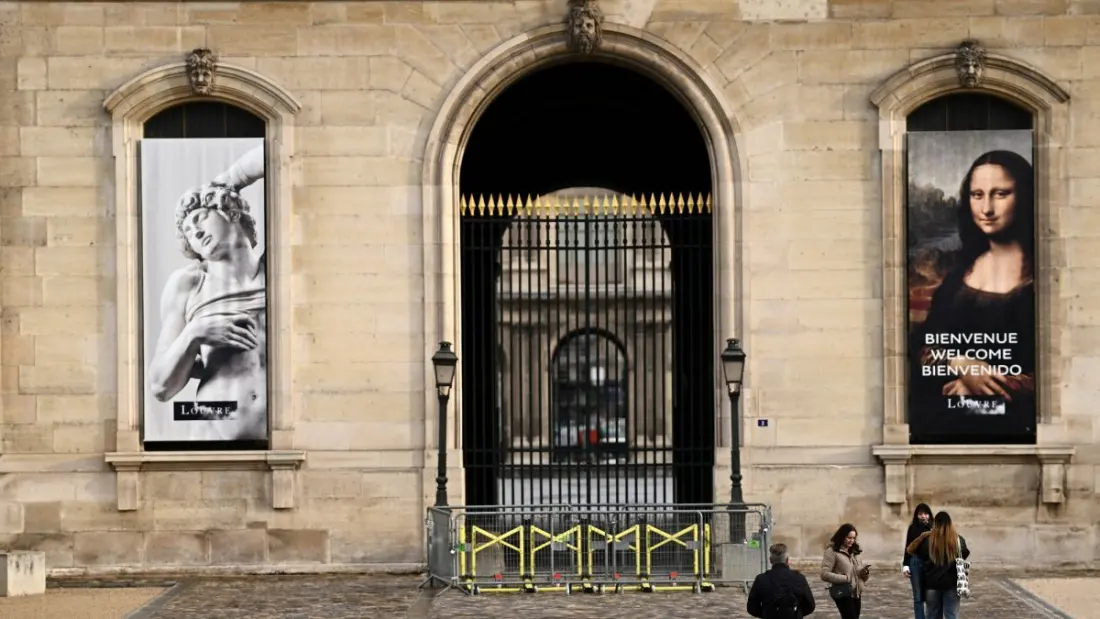
If you had a Louvre slot booked for a Saturday in late October 2026, odds are you didn't use it. Paris's big museums — the Louvre, the Orsay, the Picasso Museum and the Grand Palais, where a major Cézanne exhibition was running — all closed their doors as France mobilised for another wave of demonstrations.
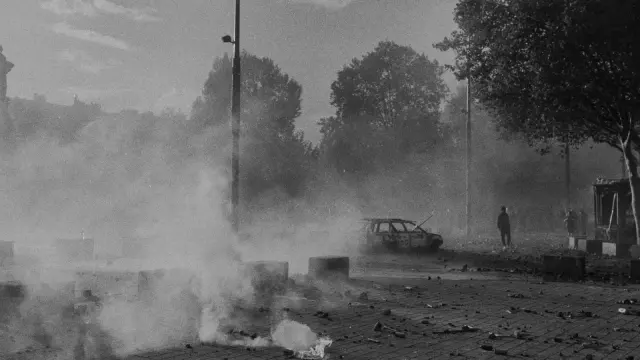
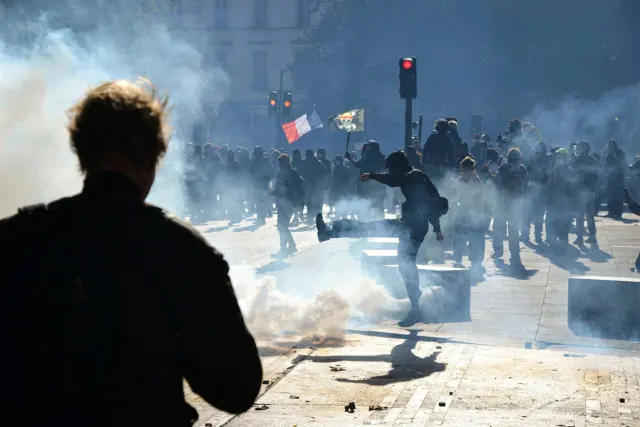
The scale of the security operation is unusual even for France. Interior Minister Laurent Nunez said up to 70,000 police officers would be on duty nationwide, backed by helicopters, armoured vehicles and water cannons. The reason: the previous weekend saw more than 500,000 people march across the country, with looting, burned cars and attacks on public buildings in Paris and other cities. Around 3,000 shops were damaged or looted, and many Parisian businesses spent the week boarding up windows. Paris's police prefect, Patrice Faure, even suggested shopkeepers hire private security — a remark he walked back after criticism.
The cultural fallout goes beyond museum closures. Art Basel's Paris fair opened to the public on the Friday but scrapped its entire weekend programme over safety concerns. Protest marches went ahead in Paris and Marseille, while authorities banned rallies in Lyon, Nice and Montpellier — bans that trade unions slammed as unconstitutional. In Limoges, a suspected arson attack nearly destroyed the city's 19th-century city hall.
What started the whole thing? Not politics in the usual sense, but a high school protest southeast of Paris over staff shortages. Class boycotts spread through the suburbs and then nationwide, with students demanding better-funded schools and a fairer university admissions system. As the government fumbled its response, the movement swelled into something much broader — anger over the cost of living, months before French voters choose a successor to President Macron, whose popularity has sunk to its lowest point since he took office in 2017. A separate demonstration in Orléans, timed against a congress of Marine Le Pen's party ahead of next spring's election, drew some 50 organisations including unions, left-wing parties and student groups.
For anyone travelling to France, the practical picture is simple: major attractions can close at short notice, weekend city-centre plans are risky, and cities well beyond Paris — Marseille, Limoges, Orléans — are affected too. Check museum and fair websites on the day, expect boarded-up shops and heavy police presence around big squares like Place de la République, and consider shifting sightseeing to weekdays until things calm down. With a presidential election looming, more protest weekends are likely whatever happens next.