Most travellers can name El Salvador's beaches and volcanoes. Fewer know that the country runs one of Central America's most packed festival calendars, from solemn processions to streets where participants hurl flaming, fuel-soaked balls at each other.
The big one is Holy Week (Semana Santa) in March or April. Churches hold processions nationwide, and families spend hours crafting alfombras — vivid sawdust carpets laid along the parade routes, patterned with biblical scenes and geometric designs. In early August, the capital takes over with Fiestas Agostinas, honouring the Divine Savior of the World, San Salvador's patron. The centrepiece is La Bajada on 5 August, tied to the Transfiguration, and the week mixes religious ceremony with parades, concerts and amusement rides.
Then there are the festivals you won't find anywhere else. On 31 August, the town of Nejapa stages Las Bolas de Fuego, where locals throw burning kerosene-soaked balls through the streets — a tradition variously linked to an old volcanic eruption and to religious history. In November, Tonacatepeque's Festival de la Calabiuza is El Salvador's answer to Halloween: night parades with handmade costumes, skull-like decorated gourds and characters from local folklore such as La Siguanaba and El Cipitío. Ahuachapán glows every 7 September for the Festival de los Farolitos, when residents line homes and sidewalks with handmade lanterns for the birth of the Virgin Mary. And in May, the town of Panchimalco hosts the Flowers and Palms Festival, honouring the Virgin Mary with flower-decked streets, traditional dress and music.
Layered under these headline events are fiestas patronales — patron saint festivals held in nearly every municipality, their dates varying by saint. Santa Ana celebrates in July; San Miguel erupts each November with its famous Carnaval de San Miguel. Smaller towns put on quieter, more personal versions that are easy to stumble into. On top of that, 15 September is Independence Day, marked by school marching bands and civic parades commemorating independence from Spain in 1821, and December belongs to Christmas and Las Posadas, when families go door to door singing and praying.
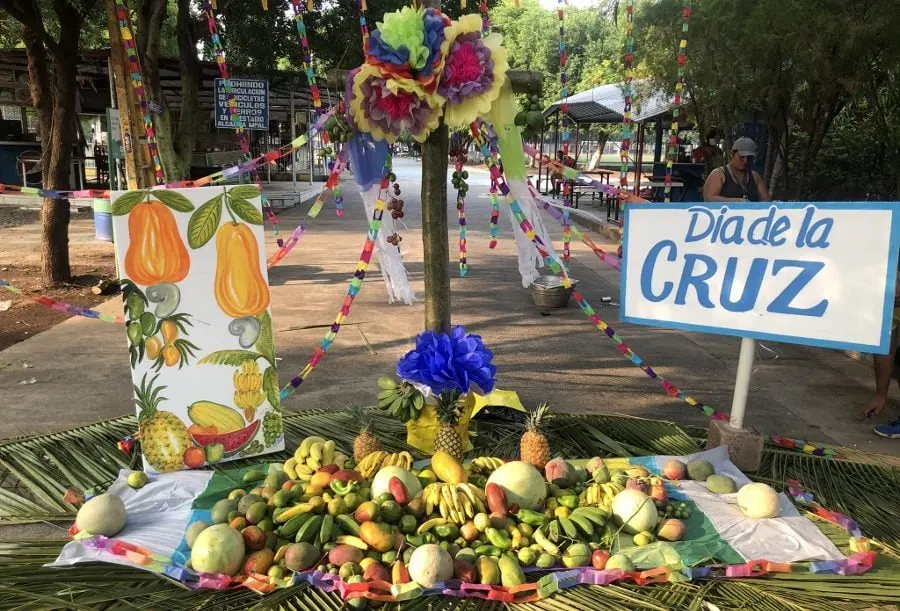
What makes all this worth building a trip around is the blend. A single festival day can start with a solemn morning procession and end in street parties, music and food. Each town puts its own spin on shared traditions, so visiting two festivals in the same month can feel like two different countries. For travellers, timing is everything: early August for the capital's biggest party, September for lanterns and independence parades, November for folklore and San Miguel's carnival. Late May to 3 May's Día de la Cross offers a gentler entry point, when families decorate crosses with paper, flowers and fruit to mark the start of the rains. Come with flexibility and an appetite for crowds — the best moments tend to be the ones no timetable lists.
Story based on reporting from El Salvador Info.