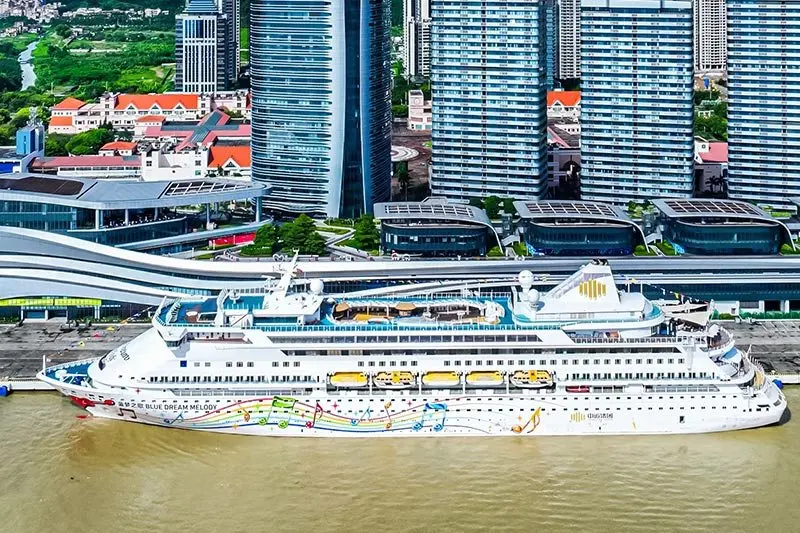
Two ships with well-known European cruise pedigrees are on the move after the collapse of their most recent owner, Chinese start-up Blue Dream Cruises.
Blue Dream Cruises shut down in late December 2025 after roughly three years in business, undone by mounting legal and operational troubles. Its two vessels are now being dispersed. The Blue Dream Star has already changed hands — shipping database Equasis lists Istanbul-based Exodus Ships as the new owner, with Perla Gemi Liman Isletmeciligi handling commercial and management duties. No official announcement has been made, and details of the sale remain thin.
The 836-passenger Blue Dream Star left China in September for a long repositioning voyage to Europe, transiting the Red Sea and the Suez Canal, pausing for a technical stop in Salalah, Oman, and reaching the Mediterranean in early November. The ship dates back to 2001, when it was built for Royal Olympic Cruises, and had been idle since late 2024 when it was replaced in service by the Blue Dream Melody.
That second ship, the Blue Dream Melody, may be heading to auction. Industry sources say the 1,218-passenger vessel — formerly AIDAvita, built in 2002 for AIDA Cruises — is likely to be sold off soon. It has been laid up at the Chinese port of Beihai since early 2026, and has effectively been on the market since March, when the Beihai Maritime Court arrested it over an unpaid fuel bill of around $599,000. Blue Dream had bought the ship from AIDA in early 2024 as part of a rapid build-up that began with the 2020 purchase of the Blue Dream Star from Diamond Cruises.
Why does this matter to cruise travellers? Both ships spent years carrying European holidaymakers — the Melody as AIDAvita, a familiar face on German-market itineraries — and veteran tonnage like this often resurfaces with smaller or regional operators. If you sailed on either vessel under its former flags, keep an eye out: it could return to service under a new name and brand, particularly in the Mediterranean where the Star is now headed. The story is also a reminder of how quickly newer cruise brands can appear and vanish in Asia, leaving laid-up ships that filter back into the second-hand market.
Credit: Cruise Industry News